By Carlos Barboza

He who has a why to live can bear almost any how.” —Friedrich Nietzsche
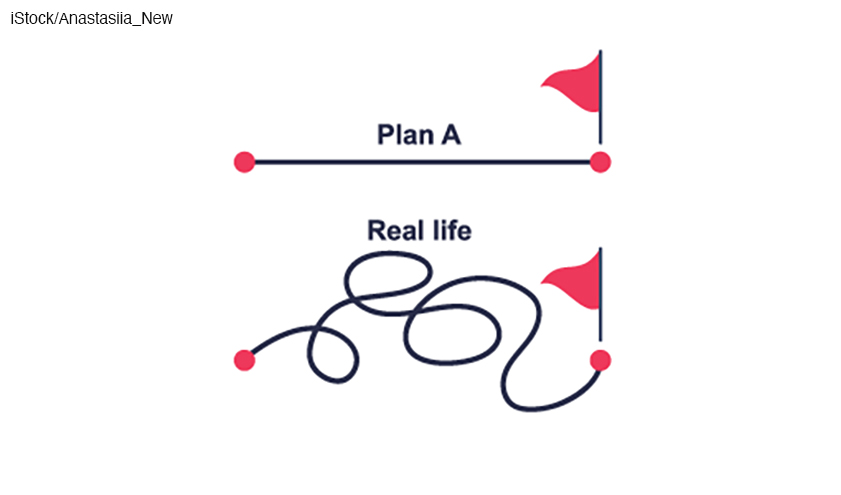
In business and in life, safety nets are comforting. We love the idea of having a backup plan, a Plan B that we can lean on if things get hard. Yet history shows that some of the most remarkable leaders succeeded not because they had many options, but because they eliminated them. By removing the escape hatch, they unlocked commitment, creativity, and resilience.
In sports, Bo Eason, a former NFL player turned leadership coach, often reminds audiences: “There is no Plan B for your A-game.” In psychology, this is called the commitment effect. When we believe there is no alternative, our brains find new ways to win. For leaders, this doesn’t mean recklessness. It means clarity: choosing one path and going all in.
Running a recycling yard, auto parts company, or any small business is tough. The economy fluctuates, employees leave, technology evolves, and regulations shift. It feels natural to create fallback options. Yet Plan B often becomes an excuse for half-hearted effort in Plan A.
Jim Collins, in Good to Great, highlighted that the best companies did not hedge endlessly—they confronted brutal facts and acted decisively. Leaders who cling to backup plans unconsciously signal doubt to themselves and their teams.
Let’s talk about examples. Hernán Cortés, when arriving in Mexico, famously ordered his men to burn the ships. With no way back, they fought harder. While controversial, the lesson is clear: full commitment sparks extraordinary action. Another example would be Steve Jobs, when returning to Apple, cut dozens of projects to focus entirely on a handful. That ruthless focus gave us the iMac, the iPod, and, later, the iPhone.
Consider two entrepreneurs: one keeps a side job “just in case,” while the other commits fully to the business. The first hesitates when challenges arise. The second innovation is that survival depends on it. Guess who grows faster?
Behavioral scientists describe a phenomenon called loss aversion: people fear losing more than they enjoy winning. When there’s no backup, loss aversion becomes fuel. Leaders think, “I can’t afford to fail,” and that urgency breeds ingenuity.
Angela Duckworth, in Grit, explains that sustained passion and perseverance—not talent—drive long-term achievement. Having no Plan B forces leaders to develop grit.
Coaching Applications for Yard Owners
- Clarify Your A-Game
Ask: What is my Plan A? Is it growth through e-commerce? Expansion into new territories? Strengthening customer loyalty? Unless this vision is crystal clear, abandoning Plan B becomes meaningless.
- Communicate Commitment
Teams need to feel their leader’s conviction. When employees see hesitation, they mirror it. When they see unshakable clarity, they rise to the occasion.
- Use Constraints to Innovate
Having fewer options can feel limiting, but constraints spark creativity. A yard owner who cannot outspend competitors must out think them: through better service, stronger supplier relationships, or smarter use of technology.
Of course, not every Plan B should be abandoned. Leaders must separate backup mindset from risk management. Insurance, legal structures, and financial safeguards are necessary. The goal is not to eliminate protection—it is to eliminate hesitation. As the proverb says: “If you chase two rabbits, you catch none.”
Commitment without Plan B is not natural—it is trained. Like exercise, it starts with small reps:
- Choose one business priority for the quarter, instead of three.
- Make one key hire and invest fully in their development.
- Say no to one opportunity that distracts from your core focus.
Each decision builds the muscle of courage. Over time, this becomes a leadership identity.
Imagine facing a decision: invest in modernizing your inventory system or keep running the outdated one while “considering alternatives.” A leader with Plan B delays, research drags, and opportunities slip. A leader without Plan B commits, invests, and adapts along the way. The difference is months of progress versus months of doubt.
What Famous Thinkers Teach Us
- Marcus Aurelius taught: “If it is not right, do not do it; if it is not true, do not say it.” This clarity of principle is Plan A leadership.
- Ramit Sethi, in I Will Teach You to Be Rich, advises automating your financial decisions to eliminate hesitation. Similarly, leaders automate conviction by eliminating escape routes.
- Seneca reminded us: “It is not because things are difficult that we do not dare; it is because we do not dare that they are difficult.”
Here’s a coaching exercise: write down your top three goals for the next year. Now cross out two. Focus only on the one that matters most. Commit publicly—tell your team, write it on your wall, make it non-negotiable. Watch how that singular focus transforms your energy and results. Good luck, and remember, “No plan B”.
Leadership is not about having a thousand doors open; it is about walking boldly through one. Plan B is comfort; Plan A is destiny. Great leaders know that when you remove the safety net, you discover wings.
By leading without a Plan B, you give yourself and your team permission to go all in—and sometimes, going all in is the only way to win. I’ll end up with a famous phrase from Norman Vincent Peale: “Throw your heart over the fence, and the rest will follow.”

Carlos Barboza is the owner of Eco Green Auto Parts, Orlando, FL. Their website is https://ecogautoparts.com and they can be found on Facebook @ecogreenautoparts.