
Three professional auto recyclers share their similarities and differences, and ideas for running an efficient facility.
Maura Keller

Across all industries, identifying key business practices allows a company to standardize its most impactful processes. Within the automotive recycling industry, not only are particular business practices crucial for consistency, efficiency and strategic success, but these practices also help minimize risk, improve employee performance and align with the company’s overall goals. And most importantly, utilizing best practices also improve everything from employee training to customer satisfaction.
Automotive Recycling connected with three auto recycling companies who utilize a full-service, self-service, and hybrid approach to their businesses. Some key business practices stood out as helping these companies achieve the success they strive for.
Among all three entities, quality control is paramount. This includes inspecting, cleaning, testing and guaranteeing parts for customers. Full-service means hiring and training skilled employees for efficient and safe dismantling, ensuring parts are removed without damage. Another key full-service business practice involve superior customer service including fast turnaround times and a hassle-free experience for the customer.
Self-service best practices revolved around establishing clear safety rules to keep customers safe.
Companies that are specifically self-service also focus on providing a large variety of vehicles and maintaining a diverse inventory for customers to choose from.
For a hybrid company that offers both full-service and self-service components to their business, the type of service may vary based on the part type needed. A hybrid service model also integrated a variety of price points and warranty options that appeal to a wide range of customer budgets. Hybrid business models also offer operational flexibility while catering to different customer needs.
For all companies, regardless of business model, a common thread to their success includes focusing on safety, sustainability, and efficiency through technology.
The Full Service Business Model
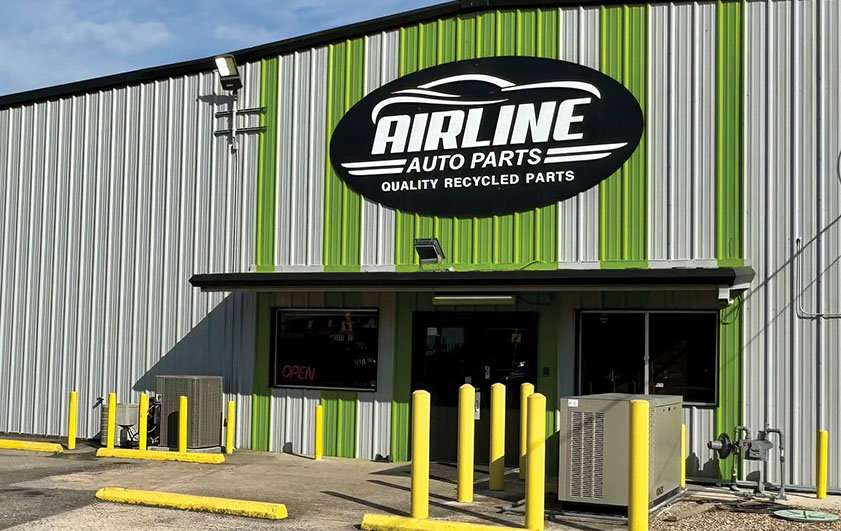
Airline Auto Parts, located in Houston, is a full-service automotive recycling facility. Originally established as a mom-and-pop operation in 1989, the company steadily expanded its capabilities by forming strong partnerships with other reputable salvage yards.
“These relationships have allowed us to broaden our inventory, improve parts availability, and strengthen our position within the industry,” says Peter Nguyen, general manager at Airline Auto Parts. “Our growth has also been driven by a commitment to continuous improvement. We have invested heavily in modern inventory and procurement systems, rigorous quality-control processes, and ongoing upgrades to our facility. Equally important, we focus on building a strong internal culture – prioritizing teamwork, professional development, and training high-quality team members who share our dedication to excellence.”
Today, Airline Auto Parts continues to operate as a premier full-service automotive recycler, serving body shops, repair centers, insurance companies, and retail customers with recycled parts backed by a customer-focused team and a strong warranty program.
Airline Auto Parts operates from a single location and processes an average of 100 vehicles per month. By structuring the company into dedicated departments and focusing on making each one as efficient as possible, they are able to minimize waste and maximize profitability.
“Our specialty is late-model foreign and domestic vehicles, with more than 50% of our inventory focused on trucks and SUVs,” Nguyen says.
Over the past five years, Airline Auto Parts has made several significant upgrades to modernize their operations and adapt to the increasing technological complexity of today’s vehicles.
As Nguyen explains, they transitioned from Powerlink to the Pinnacle inventory system, joined the RCD (Recyclers Cross Dock) network, and implemented EZ-QC to strengthen the company’s quality control processes. In addition, they joined a peer group with Profit Team Consulting and expanded their industry knowledge through active involvement with organizations such as ARA and URG (United Recyclers Group), as well as by attending numerous trade shows and conferences.
“We do not currently hold any certifications, but we plan to begin the process of obtaining ARA’s CAR Certification,” Nguyen says.
Currently, Airline Auto Parts has 45 employees. While some of the team members come from various areas within the automotive industry, the company also places a strong emphasis on hiring skilled individuals from other industries and retraining them for success in the automotive recycling industry.
“Most new hires go through a probationary period to demonstrate their abilities, and once they prove themselves capable, we provide additional training to help them take on more complex responsibilities,” Nguyen says.
“We strongly value internal growth and make it a priority to promote from within the company.
This full-service auto recycler uses the Pinnacle inventory system to manage and track vehicles, parts, sales, and overall profitability. With support from Mike Kunkel of Profit Team Consulting, they utilize Pinnacle’s reporting tools to analyze the company’s performance and monitor progress toward their goals.
“Some of the key metrics we focus on include buying vehicles based on projected gross profit, tracking days to breakeven, monitoring invoices per hour, and reviewing both incoming and outgoing call activity,” Nguyen says. “These metrics help us evaluate efficiency, guide purchasing decisions, and ensure our sales team is performing at a high level.”
Safety is Airline Auto Parts’ top priority, and it is the foundation of all of the company’s training programs. They conduct weekly meetings with the sales team, department leads, and other key departments to reinforce best practices, review expectations, and ensure everyone is aligned and moving in the right direction.
“When employees are hired, they receive a detailed job description and a list of specific responsibilities outlined in a signed agreement. After their probationary period,
we evaluate their performance to confirm they are meeting expectations,” Nguyen says. “If necessary, employees may be reassigned to positions that better match their strengths.”
Airline Auto Parts also maintains a strong cross-training program so that team members can perform multiple tasks, which ensures operational continuity when someone is absent.
“Tools like Pinnacle and EZ-QC allow us to monitor performance, verify that procedures are being followed, and hold employees accountable for completing their duties correctly and consistently,” Nguyen says.
To stay competitive, Nguyen adds that the company must continually adapt to evolving technology and market demands.
“Our people are our greatest investment, and it is essential to equip them with the tools and resources they need to keep the company operating at its highest level,” Nguyen says. “In addition, we have transitioned most of our staff from hourly pay to performance-based compensation. By giving employees the opportunity to earn more through strong performance, we’ve seen a significant increase in motivation and overall productivity.”
From a full-service perspective, how does Nguyen view the future of automotive recycling?
“The automotive industry has a bright and evolving future. People will always need vehicles for transportation, and the ongoing evolution of cars will shape the direction of our industry,” he says. “Recycling facilities like us will continue to adapt and evolve alongside these changes. Those who embrace innovation and improvement will thrive, while those who resist change may be left behind. Electric vehicles are on the rise, but they represent just a small percentage of the automotive industry.”
The Self-Service Business Model
BYOT Auto Parts began as a single self-service recycling yard focused on providing a clean, organized, and affordable way for customers to pull their own parts. After purchasing the Waco, Texas location in 2016 and opening it in January 2017, the company expanded steadily across Texas. Today, BYOT operates five self-service recycling yards – three in Texas, one in Louisiana and their newest location in Jackson, Mississippi – supported by a corporate office.
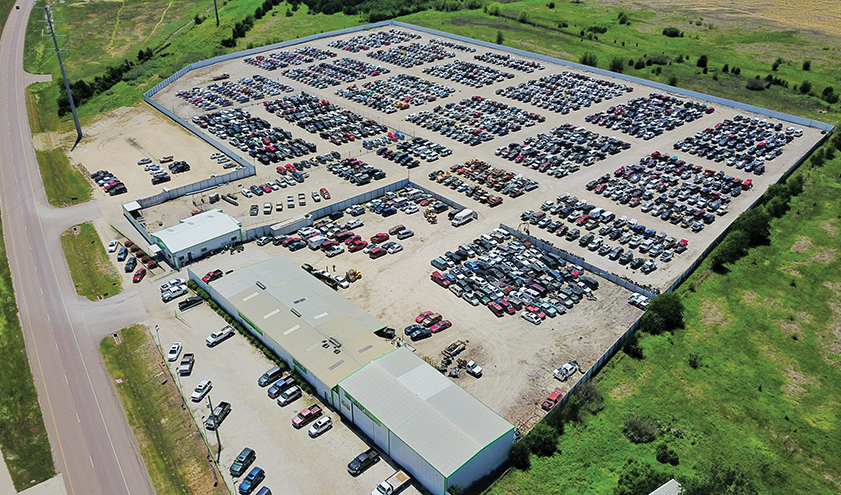
“We try to focus on the same core principles at all facilities: Well organized and clean yards, consistent processes, transparent pricing, and a strong customer-first culture,” says Lance Thomas, owner and president of BYOT Auto Parts.
Across the company’s five locations, BYOT processes approximately 11,000 to 12,000 vehicles per year. Each yard handles roughly 2,000 to 2,500 vehicles annually, depending on market availability.
“We source a wide range of makes and models to meet customer needs, with trucks and Imports being especially popular in our markets,” Thomas says.
The last five years have seen significant technological advancement in vehicles, and BYOT has adapted accordingly. They built a centralized call center and digital vehicle acquisition system similar to modern online car-buying platforms.
“We use digital tools for pricing, inventory classification, yard management, and customer communication,” Thomas explains. “We are also launched some AI-based systems and a customer rewards app to modernize customer engagement. Although BYOT is a self-service operation and not pursuing full-service certifications, we maintain strict internal SOPs that align with modern safety, environmental, and operational best practices.”
BYOT employs roughly 90 to 100 people across the company’s five yards and headquarters. Hiring has shifted in recent years as both technology and labor trends evolve. They now look for team members who are comfortable using mobile applications, digital systems, and have a positive and self-motivated attitude.
“Positions involving inventory, buying, or setting vehicles increasingly require familiarity with modern vehicle changes,” Thomas says. “We intentionally hire for culture fit and train for skill, focusing on retention and leadership development.”
Managing five locations requires the BYOT team to use detailed standard operating procedures, strong communication, and consistent reporting. Local managers oversee daily operations, while headquarters provides oversight, support, and accountability. Shared metrics, daily reporting, regular visits, and clear processes ensure each location operates consistently.
“The priority is giving each yard the staffing, equipment, and support they need to stay profitable and aligned with company culture while also maintaining extremely clean and organized facilities and constantly working to eliminate the ‘junk yard’ mentality within our customers, the public, and regulatory agencies,” Thomas says.
BYOT also uses a combination of inventory software, internal dashboards, and SOP-driven processes to track vehicles, inventory cycles, sales, scrap output, and crushing operations. The metrics most important to Thomas include vehicles purchased per month, cost per vehicle, sales per vehicle, inventory cycle time, scrap and core revenue stability, customer traffic patterns, and employee productivity.
“We also monitor average ticket, percent of customers purchasing, (PPA) purchase per admission, and customers per car set in the yard,” Thomas says. “These indicators provide a full picture of operational health and long-term sustainability.”
When it comes to training, BYOT uses an ongoing, structured, and role-specific process. Key areas include safety procedures, vehicle setting standards, tire inspection, equipment operation, environmental compliance, and customer service.
According to Thomas, accountability is maintained through daily checklists, supervisor verification, digital inspection logs, and regular performance audits. Training is continuously reinforced rather than treated as a one-time event.
“We have also initiated video training that we create to provide visual training for our new hires for our various positions,” Thomas says.
Throughout the company’s history, Thomas has seen self-service auto recycling evolve substantially.
“Customers expect clean, safe, organized environments – not the old-style ‘junkyard.’ Our best practices include predictable inventory refresh cycles, safe and well-maintained wheel stands, clean and organized rows, transparent pricing, strong customer rewards, and technology that streamlines buying and communication,” Thomas says. “The items, along with regular sales promotions that are fun and attracting continue to drive admissions and new customers. Consistent training and culture across locations also help ensure customers receive a reliable experience.”
Looking ahead, Thomas says the future of automotive recycling is driven by technology, training, and the shift toward EV and hybrid vehicles. He says that recyclers will need robust digital systems and software, strong safety training, and clear processes for handling high-voltage components and batteries.
“EVs bring new challenges but also major opportunities in battery lifecycle management, rare-earth material recovery, and component resale,” Thomas says. “The recyclers who modernize, invest in technology, and build strong customer-focused brands will shape the next generation of this industry.”
The Hybrid Business Model
Founded in 1977 as three separate companies – Hansen Truck Salvage, All Foreign and All American – United Auto Recyclers was renamed after Dave and Anne Hansen purchased the three entities and merged them under the name United. Located in Omaha, Nebraska, today United Auto Recyclers processes between 1,200 and 1,500 vehicles per year.
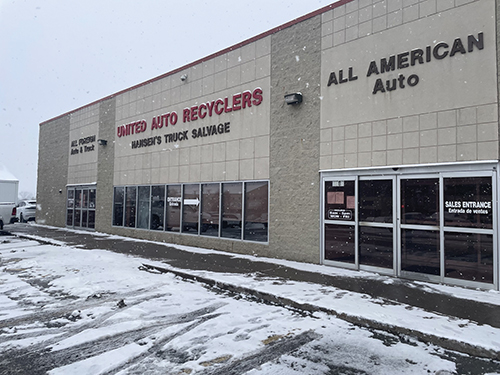
“Our average age is a 2015 model year and we buy about one-third trucks,” says Adam Lindley, general manager at United Auto Recyclers. “We stay away from EVs for now. We do hybrid and work to keep our employees trained to process them safely.”
Currently, United has a total of 85 employees. Computer skills are a must in all positions and the company uses phones, tablets and computers in all aspects of the facility.
“We use Pinnacle and EZ as well as Bid Buddy for bidding. I track sales dollars and number of parts,” Lindley says. “For the warehouse, we track accuracy and cancelled orders. Vehicle stock is dependent on details. I track accuracy and missing parts.”
Training is paramount throughout United’s hybrid facility. Currently the company is developing audits so they can observe the employees’ progress on a quarterly basis, evaluating what they do well and where the company can improve training.
In addition to offering millions of parts on the warehouse shelves of this 24-acre facility, United Auto Recyclers also offers a self-service lot with full inventory listing on the company web site.
One of United’s key business practices across both their full-service and self-service programs is ensuring accurate inventory and the ability to deliver as the part is described. The company’s web site features a full inventory of vehicles in the self-service lot as well as clearly defined prices based on part type.
And it’s United’s team of employees that help keep the expansive full-service and self-service entities of the company running smoothly. “Good employees that care and the quality of product we supply is a huge factor,” Lindley says. “The best chance we have to continue to be successful is to listen to our customers, they will direct us to where we need to go. I know that EVs will grow in demand, the market that comes from it depends on the manufacturers use of interchangeable parts and ability to repair and replace the by the general public.”

Based in Minneapolis, Minnesota, Maura Keller is a seasoned writer, editor, and published author, with more than 20 years of experience. She frequently writes for various regional and national publications.


