Built on family values and forward-thinking operations, Conrad’s Auto Salvage continues to grow as a trusted source for quality recycled auto parts and dependable service.

By Maura Keller
At Conrad’s Auto Salvage, expertise and service go hand in hand. The Mondovi, Wisconsin–based operation has built its reputation on providing quality used auto parts for late-model vehicles, serving both foreign and domestic cars and light trucks. But behind that offering is a family-driven business that has steadily evolved over three decades—adapting to industry shifts, embracing technology, and maintaining a strong commitment to its community.
From its humble beginnings with a single building and no inventory to a thriving, multi-building operation processing thousands of vehicles each year, Conrad’s Auto Salvage exemplifies the resilience and adaptability of a family-run business. By embracing innovation while staying grounded in customer service and community values, the company is well-positioned to navigate the evolving landscape of automotive recycling for years to come.
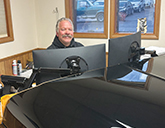
In this Q&A, Jerry Conrad shares insights into the company’s origins, growth, operational strategies, and the challenges and opportunities shaping the future of automotive recycling.
Automotive Recycling magazine: Conrad’s Auto Salvage has built a strong reputation in the region. Can you share the company’s history and how it first got started in Mondovi?
Jerry Conrad: Ronald Conrad owned a salvage yard in Baldwin, Wisconsin, and sold that to pursue other things. In 1994, Ronald and I found a small ad in The Trading Post advertising a salvage yard for sale. We purchased that yard in Mondovi—it had one building and zero cars—and that’s where we began our journey.
In 2019, I bought Ron out when he “retired,” and in 2021, our son Cody began buying into the business. He’ll continue the operation moving forward. It’s always been a family business, and that continuity is something we’re proud of.
AR: How has the business evolved over the years in terms of size, capabilities and the types of vehicles or materials you process?
Conrad: We started out with just the two of us, and after 30 years, we’ve grown to more than 20 employees. Early on, we were processing a couple of hundred cars a year. Today, we’re processing more than 1,000 vehicles annually.
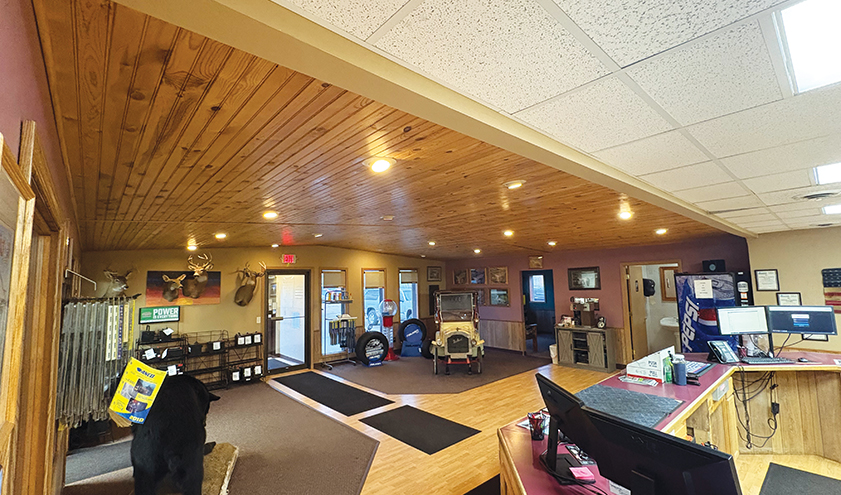
That growth has been supported by several building expansions over the years. In 1996, we built our first addition, which started as a dismantling space and is now used for warehouse storage. In 2001, we completed a full office remodel and added cold storage.
In 2005, we added an inventory shop where we catalog incoming vehicles.
By 2014, we expanded again with a tear-down building that has four bays, allowing us to dismantle multiple vehicles at once. Then, in 2019, we connected the original office building to the tear-down facility, creating additional inventory space and a dedicated area for quality checks and shipping. We also added a fluids shop, originally designed to drain vehicles before tear down, which has since evolved into a space for tire and oil services as we expanded into additional offerings.
AR: What have been some of the key milestones or turning points that shaped your growth and long-term success?
Conrad: One of the biggest turning points came in 2009 with the Cash for Clunkers program. While it was controversial in many ways for the broader economy, it brought a major influx of vehicles into our yard. Our inventory doubled, and we had significantly more parts to process and sell.
That growth led us to open a retail location in Altoona, Wisconsin. Later, in 2015, we added a second retail location in Menomonie to better serve our local communities.
In 2019, when we completed the remodel of our main yard, we made the decision to close the Menomonie location due to staffing challenges. Then, in 2021, we sold the Altoona location and moved operations to a larger facility in Eau Claire, where we could offer additional services, such as oil changes and tire installation.
Most recently, in 2025, we made the difficult decision to close the Eau Claire location due to ongoing staffing shortages and bring everything back under one roof in Mondovi. That move allows us to focus on what matters most – customer service and satisfaction.
AR: What core services and products does Conrad’s Auto Salvage offer today, and how have those offerings evolved in response to market demand?
Conrad: Our primary focus continues to be the sale of used auto parts to individuals, body shops, and other salvage yards. That’s the backbone of our business.
More recently, we’ve expanded into services like tire sales and oil changes. Offering those services has helped us build stronger relationships with customers and bring them back more often, especially those purchasing used tires. It’s about meeting customer needs where they are and providing more value in one place.
AR: How has the rise of newer vehicle technologies—such as electric vehicles and advanced driver-assistance systems—impacted your operations and inventory?
Conrad: Electric vehicles present a unique challenge for our industry. They’re much more complicated to dismantle, and there are safety concerns when working on them. Because of that, we limit the number of electric vehicles we purchase. We don’t buy fully electric vehicles, and we only take in a small number of hybrids.
There are also risks, particularly with battery fires. If an electric vehicle catches fire, it can take days to fully extinguish and requires extended monitoring to make sure it doesn’t reignite. That’s a significant concern for any salvage yard.
As the industry continues to evolve, figuring out how to safely and effectively handle these vehicles will be a major focus.
AR: What role does technology play in your business today, from inventory management to parts sales and dismantling processes?
Conrad: Technology is a big part of our day-to-day operations. It starts the moment a vehicle enters our yard. We use systems like Powerlink and Inventory Buddy to catalog both the vehicles and the individual parts we plan to sell.
We also rely on EZ-Suite to assign parts and vehicles to different departments. That helps streamline workflows—for example, moving a part from being pulled off a vehicle to quality control and then to shipping.
On top of that, we use Power DB to locate parts and vehicles quickly within our system. All of this technology helps us stay organized, efficient, and responsive to customer needs.
AR: Workforce development remains a challenge across the industry. How are you attracting, training, and retaining skilled employees?
Conrad: We’re fortunate to have a great group of employees. They’re like family to us, not just workers. That culture makes a big difference in retention.
Like many in the industry, we face challenges in finding new, qualified employees. We rely heavily on word-of-mouth referrals from our current staff. If an employee refers someone who turns out to be a good fit, they receive a bonus. That approach helps ensure we’re bringing in people who align with our values and work ethic.
AR: Sustainability is central to automotive recycling. How does Conrad’s approach environmental responsibility and resource recovery?
Conrad: Environmental responsibility is a core part of what we do. We work with JAK Environmental to manage our stormwater permits and maintain our CARS certification.
We also make sure that all fluids and materials are properly handled and recycled. Used oil is repurposed through waste oil burners to heat our facility. Antifreeze, windshield washer fluid, and batteries are all recovered, recycled, and resold whenever possible.
At the end of the day, our business is about giving materials a second life, and we take that responsibility seriously.
AR: What sets Conrad’s Auto Salvage apart from other recyclers in the region, and how do you maintain strong relationships with customers and partners?
Conrad: We go out of our way to locate parts for our customers, even if it means looking beyond our own inventory. That level of service helps build trust and long-term relationships.
We’re also very involved in our local community.
We host training sessions at our facility, attend community events, and volunteer whenever we can. Being active in the community helps us stay connected and reinforces the relationships that have supported our business over the years.
AR: Looking ahead, what opportunities and challenges do you see shaping the future of your business and the automotive recycling industry as a whole?
Conrad: One of the biggest challenges will be figuring out how to handle electric vehicles and their components. As more of those vehicles enter the market, the industry will need to develop safe and effective methods for recycling them.

Based in Minneapolis, Minnesota, Maura Keller is
a seasoned writer, editor, and published author, with more than 20 years of experience. She frequently writes for various regional and national publications.