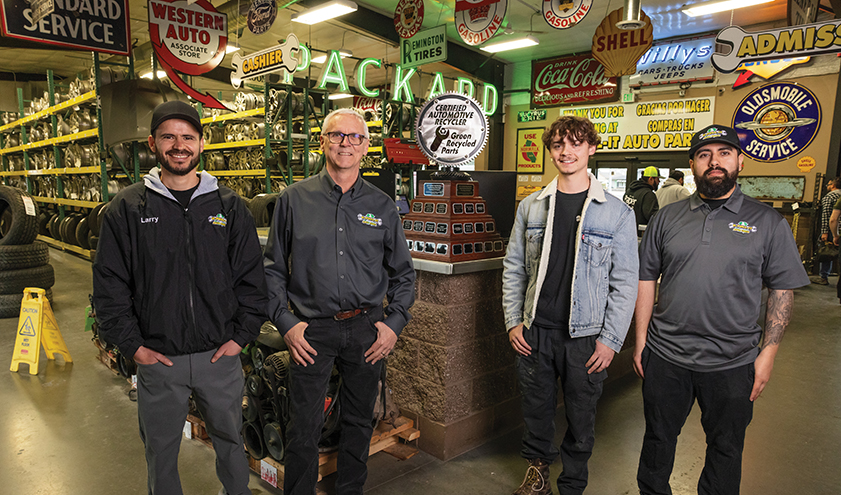
U-Pull-It Auto Parts, Inc., Pasco, Washington, is the 2025 Certified Automotive Recycler of the Year (CAR) member. The secret to their success is to do it right the first time.
By Caryn Smith • Photos by Sonja Yearsley

Relying on years of experience working in the self-service sector for Foster Auto Parts and LKQ, Mark Forcum set out to apply his knowledge to his own venture. What started out as a “side hobby” has now become a top-notch three-location Certified Automotive Recycler (CAR) operation. Automotive Recycling magazine discussed his journey from acquiring the self-service Yakima location in 2013 to expanding his self-service and now full-service auto recycling business across three locations: Yakima, Pasco, and Kennewick.
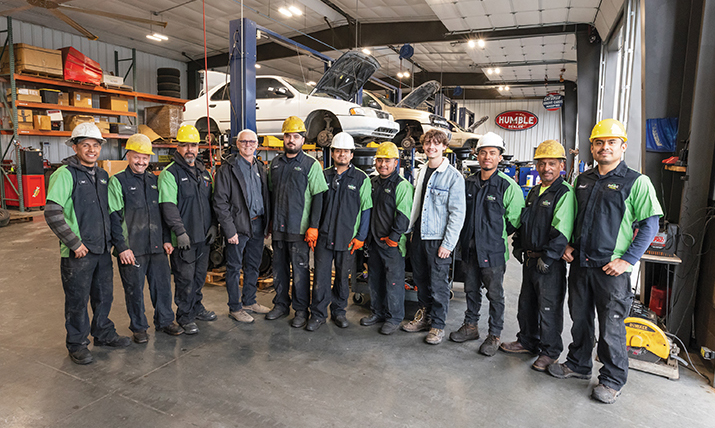
Mark detailed the extensive renovations and expansions, including a new production facility in Kennewick to support the strategic shift toward electric vehicles (EVs). He also emphasized the importance of CAR certification for environmental standards and safety, which served as the basis for building the business. Here is what he has to say.
Automotive Recycling magazine: What is your background in automotive recycling?
Mark Forcum: I started my auto recycling career at Foster Auto Parts in Portland, Oregon, in 1980. I helped Fred Hopp’s team build it into a regional powerhouse with two full-service stores and five U-Pull-It Auto Wrecking locations. In 2004, LKQ acquired Foster Auto Parts, and I continued to work for LKQ as a district manager, then moved into business development. I was traveling around the country looking for opportunities to either buy existing self-service yards for LKQ or find property to develop self-service yards from scratch. We did quite a few of those, and I held that role for 7 years.
I already had extensive experience in construction and facility development for Foster Auto Parts, where I worked prior to their LKQ acquisition. So, this work felt natural to me, and I enjoyed traveling around the country, visiting salvage yards, talking to people, and seeing what was out there.
ARM: Provide details about your business and how it has developed.
Forcum: In the fall of 2013, I acquired the Yakima location while I was still working for LKQ. This was an existing full-service yard that was neglected. It required a major remodel of the existing buildings to make them useful and to develop a sales and production area. For the first year and a half, I started with a partner and store manager to run this operation. I would come home from the road on a weekend, spend a short time with the family, and then drive from my home outside of Portland, Oregon, to Yakima to work at the site. This facility opened in early 2014.
In 2015, I decided that working for LKQ was not going in the direction I envisioned and left to devote myself full-time to the self-service business.
I purchased a Pasco location, which was an existing junkyard—it was rough—so I tore everything down, regraded the yard, and started from scratch. The facility was properly engineered for stormwater, with a block wall perimeter fence, new buildings, and equipment. This facility opened in March 2016.
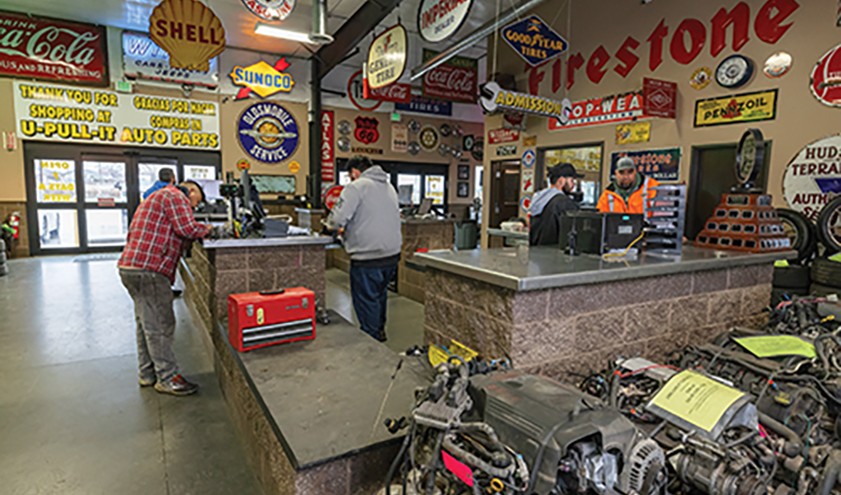
In 2019, I purchased property next door to my Yakima location to build a new production facility, expand my holding pen for incoming cars, and expand my customer parking. Yakima is now 7 acres total, with 15 employees and 900 vehicles.
In 2022, I purchased a scrapyard next to the Pasco location. I also tore down those existing buildings and remediated the soil. I built a brand-new production facility and a building to house a car crusher. I applied concrete to the entire two-acre property as a basis for hauling and processing. Pasco is now 8 acres, with 15 employees and 900 vehicles.
In September of 2023, I purchased 20 acres for the new Kennewick location. It was just raw farmland, but it was zoned heavy industrial, like my other two locations.
We built it from the ground up, with civil engineering for grading and stormwater. Pre-engineered built an all-new facility with 3 new buildings, a large car crush area for scrap, and a building to house a car crusher. We opened in May of 2025 with 900 cars in stock for self-service. This new location will co-locate U-Pull-It Auto Parts and Supreme Truck & Auto Parts. Eventually, we’ll have about 2,000 cars at this location.
Kennewick is staffed with 25 employees and serves as our corporate headquarters. I have our accounting staff, dispatch, and car buying at this location.
All my locations are ARA CAR, RECALL, and HVV Certified for electric vehicle handling.
Housekeeping has always been very important to our operation.
ARM: How far apart are these three locations, and what type of vehicles do you inventory?
Forcum: Yakima is 85 miles away from Pasco. Pasco and Kennewick are 8 miles apart. We form a nice little triangle. We focus on late-model vehicles, mainly what people drive in our weather and terrain—Subarus, Toyotas, Nissans, and lots of trucks.
That is what works for us. It is amazing how everybody has their own twist on this business; we do the same thing, but everybody has their own way of doing things. I don’t know if there’s a right way or a wrong way. If it’s working, keep going.
ARM: How did you begin work in auto recycling?
Forcum: I’d always been into cars. My mom was a hairdresser, and one of her clients was Fred Hopp, the owner of Foster Auto Parts. I was going to college part-time and was out of money. I asked my mom if she could ask if Fred could give me a job. Also, I needed some car parts for a car I was fixing up. I left college and went to work for Fred, and I never left. I started in the warehouse and, after about 6 months, became a salesperson at the counter. One of the guys went to lunch, and they sent me out to go find him because he had a history of going to lunch at the tavern and not making it back. I found him, but he wasn’t ready to come back to work. So that’s how I ended up at the sales counter.
This was before computers, so everything was on file cards. It was a lot different back then.
When I started with Fred, he had one location. By the time he sold in 2004 to LKQ, I had become a partner with him at a location in Salem, Oregon, and together we had seven locations with 150 employees. It was quite a ride.
ARM: Why did you pivot into full-service auto recycling?
Forcum: I saw an opportunity to sell more parts to more customers. It gives us an opportunity to buy more cars, and we have a place for them in the business model to maximize the return. When I look at the LKQ model and the other consolidators, I see an opportunity in the full-service model to serve the customer base that they’re not serving. I like the retail business, and I want to target independent auto-body shops, independent repair shops, and rebuilders. They need parts, and I think I can service them a lot better than consolidators. I can sell them a door and then sell them all the other pieces inside that car they need, and you can’t get that with their model. Sometimes they don’t keep the hulk of the car, so they don’t have those pieces available. We have always focused on mechanical parts, and this again gives us the opportunity to say yes more often.
ARM: How is it working with your son Mitchell as the General Manager? How do you manage the father-son vs. boss-employee dynamics?
Forcum: It’s amazing. We treat business as a learning mentoring model; he wants to learn. He’s very good at catching on quickly. I’ve always tried to teach Mitch and all the other kids how business and life go hand in hand. Learn the value of hard work and why we do things to achieve the outcomes we want. If you can’t get the outcome you want, shift gears and do something different. It is great to have him here.
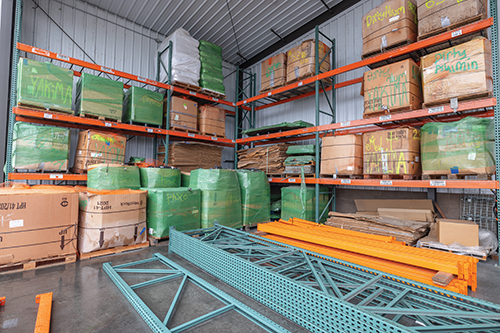
Mitchell’s been working full-time here for six years; he started when he was 19. He’s an owner. He’s a boss. We kick ideas around, and I like listening to what he has to say. Sometimes I agree, sometimes I don’t, but it’s just great to run things by each other. I think it makes us both better.
ARM: Does Mitchell ever get tripped up around the facility by his age?
Forcum: We’ve talked about that. I had the same problem. I was 20 when I started at Foster Auto Parts, and within 6 years, I was managing facilities. It’s important to lead by example. Mitchell is very calm and stays focused. He’s a hard worker. He can relate to the young people who work for us.
For our customers, he goes to dealerships and buys cars from sales managers. He presents himself in a way that they can tell that he knows what he’s talking about. He is very professional, and he represents U-Pull-It Auto Parts very well.
ARM: What trends or changes do you see in the self-service industry from when you started until today?
Forcum: I think the biggest thing is the various point-of-sale systems today, which are a great thing for the self-service industry compared to when we started. You basically had to create your own point-of-sale system.
Today, you’ve got several vendors that have out-of-the-box systems, and I think because there’s good competition, they’re getting a lot better. We’re excited to see what comes. Social media has become much more important for marketing self-service yards. I think there’s more value there than in traditional media.
We use Facebook, Instagram, Snapchat, and TikTok. The young guys run it—Mitchell, Edgar, Jeremy—so the people that are tuned in are doing it. I’m an old guy, so I’m out of the picture.
Customers demand more today than before. They want warranties, information about vehicle parts, and an easy shopping experience. We organize our yards by make and model. We put the most popular vehicles close to the sales counter so customers don’t have to search all over for the parts they want.
The complexity of vehicles has given self-service yards a lot more parts to sell. Just look at how many more items are on a 2010 Ford F-150 versus a 1980 Ford F-150. I think this trend will continue to provide a larger assortment of parts to sell.
ARM: Have you started using any AI tools?
Forcum: We just started using it for forecasting. For now, we use AI-generated data to compare it with our own manual forecasts when bidding on a car. That allows us to test and trust it, and it seems to be working well. I think there’s a lot more growth potential in AI for auto recycling that will change this industry. There might be an advantage for the early adopters who get a grasp on it. But AI is not going to be less work; it takes an awful lot of work to set it up and make it work in your system.
Mitchell is using it to write and update our policies and procedures. He is also using AI to record our equipment maintenance logs, which automatically send reminders when our production managers log the machine's hours and the date of service. It sends them a reminder of when it needs to be serviced again. AI and various models will help us run the business.
ARM: How do you plan to handle/not handle the EVs in your facility?
Forcum: We were handling EVs at all three locations. Now, we handle hybrid cars at all our locations because we buy lots of them. Then, we decided to move the pure EVs to our new Kennewick location. We store all EV and Hybrid batteries in a dedicated area of our facility.
At this point, we have sold some batteries to retail consumers. We have many that we’ll be selling to battery recyclers. Overall, the industry’s figuring it out, and I’m not going to lose any sleep over it.
Gas-powered vehicles are still the go-to here. Electric vehicles have their place in big cities. Here in Eastern Washington, people drive a lot of miles.
ARM: How important have ARA’s CAR, RECALL and HVV certifications been to your facility, and how has it helped you?
Forcum: Well, it helps us run and operate an efficient business. Personally, being CAR Certified has always been my number one goal; it’s just the way we run our business. We’ve always been housekeeping-centric. We feel that having a clean facility promotes a better, safer work environment not only for our customers but also for our employees. That’s just our policy and procedure; we live, eat, and breathe it. The CAR Certified model of best practices also prioritizes environmental protection.
I just wouldn’t want to do it any other way.
Honestly, I like to be able to sleep well at night knowing that we’re doing the right thing for everybody, and especially for our employees. I want to stay up to date on the best practices, so I don’t have to worry about someone getting hurt. That’s really the main push and goal.
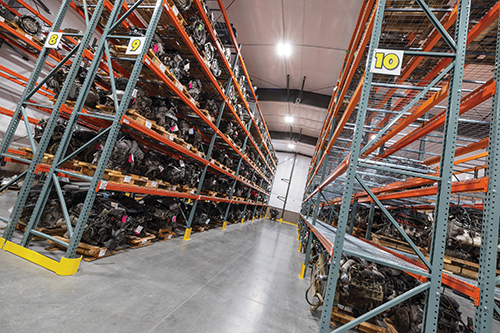
We’re processing hybrid and electric vehicles. If we don’t train and want to have employees certified to handle those cars, we shouldn’t buy those vehicles.
We also use ARA University to train our employees on all aspects of safety protocol, forklift training, vehicle dismantling, and proper lifting.
The RECALL certification is a consumer protection. We should be trained to know which airbags we should and shouldn't pull so the customer won’t receive recalled parts. If you are not in the RECALL protocol, I don’t know how you can educate yourself to ensure you’re not letting the consumer access unsafe parts.
ARM: What is the nature of your volunteer service in the ARA?
Forcum: I am on the Certification Committee. In the fall of 2025, I was nominated and accepted onto the ARA Board of Directors. For me personally, it’s been a very educational experience. I’m thrilled to be on it. I have over 40 years of industry experience, and I’m humbled to be on the committee and to be part of a great group of people.
ARM: Why do you think others should be volunteer leaders?
Forcum: I’ve been going to ARA conventions regularly for 30-plus years now. Last year, Birmingham was a fantastic show. Getting involved with ARA, whether you choose to be a speaker to share your experience or serve on one of many committees, will help the association and your business.
ARM: Do you have any final thoughts?
Forcum: I’ve had the auto recycler bug since I was a young kid. I love coming to work every single day. I love the challenge. And I love people.
I have an amazing group of employees who make this journey possible.
One of the things I like about our business is the customer interaction. It is great to see what people are buying, and I love to hear the feedback. We can sell them a set of tires for $300, and they just left a retailer where they were quoted $1,200 for the same set.
We only want to sell high-quality parts. It makes me feel good to give people a lot of value.

Caryn Smith is the editor of Automotive Recycling magazine, and has been covering the industry for over 25 years. She is a freelance writer for industry publications, such as Recycling Today.