From their roots as a small Topeka salvage yard growing to a multi-location regional operation, this business is built upon family values, strategic growth, technology adoption, and an unwavering commitment to quality recycled automotive parts.

By: Maura Keller
The ARA Certified Automotive Recycler (CAR) has been instrumental in holding us accountable to the highest standards in our general business practices, environmental responsibility, safety, and quality control.
For nearly eight decades, A&A Auto & Truck Parts has been a fixture in Kansas’ automotive recycling industry, evolving from a small family-run salvage yard into a modern recycling operation known for quality, service and continuous improvement. The company’s story is one of perseverance, innovation and deep family roots, tracing back to the 1950s.
Today, under the leadership of Curt Lewis and his family, A&A Auto & Truck Parts operates multiple properties, employs more than 20 team members, and serves customers through an extensive delivery network. Along the way, the company has embraced industry advancements, invested in new technologies, expanded its facilities, and earned recognition for its commitment to environmental stewardship and operational excellence.
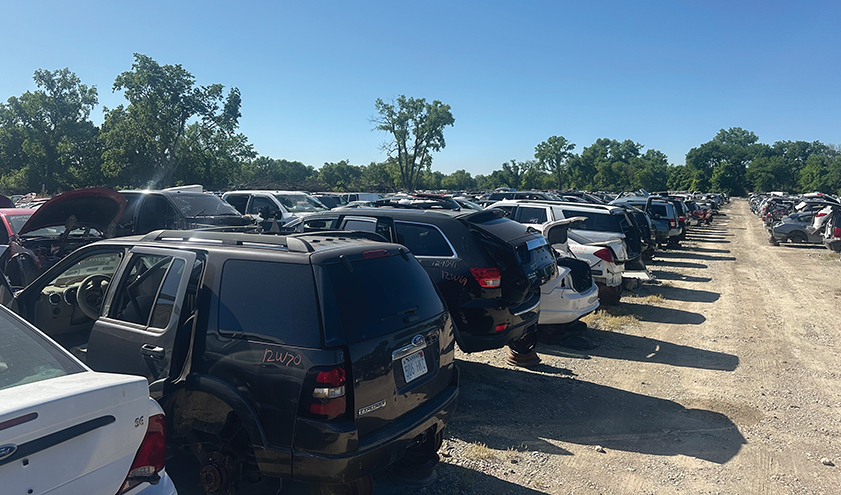
Like many successful recyclers, A&A has navigated changing vehicle technologies, evolving customer expectations, and workforce challenges while remaining focused on its core mission of providing reliable recycled automotive parts and exceptional customer service.
In this Q&A, Curt Lewis reflects on the company’s history, the milestones that shaped its success, and his outlook on the future of automotive recycling.
Automotive Recycling: A&A Auto & Truck Parts has built a strong reputation in the region—can you share the company's history and how it got started?
Curt Lewis: The history of A&A Auto and Truck Parts is truly a full-circle story. While we’ve grown and evolved over the years, we remain firmly rooted in a rich industry legacy that spans more than 80 years.
Our journey began in the 1950s, when my father, Orville Lewis, founded O. R. Lewis Auto Salvage at 229 Burgess in North Topeka—around the same time I was born. He built the business from the ground up, and in many ways, I grew up alongside it. For a time, our family even lived in a house that sat in front of the salvage yard.
When I was in college in 1977, my father decided to retire due to health reasons and sold the business to his nephew, John Lewis. John was highly driven and expanded operations by acquiring additional yards in the area. One of his first acquisitions with a business partner, Steve Jones, was a yard in south Topeka, now known as Mid America Auto Parts (LKQ). After graduating from college in 1979, I joined him in the business.
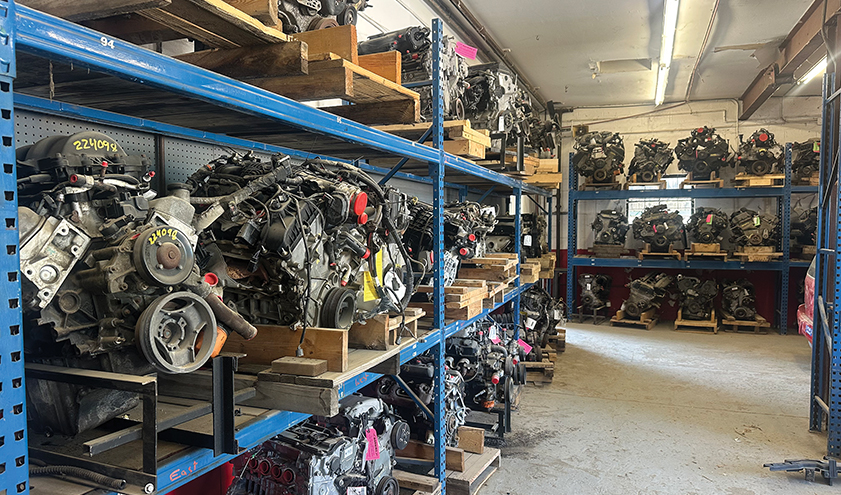
When I began working with John, my main focus was helping with rocking the yard, organization of warehouses, racking, cars on wheel stands, remodeling older buildings, and dismantling buildings. We were at the forefront of the industry’s changing landscape. Our efforts won us the ARA Beautification Award.
In 1983, John purchased A&A Auto Salvage, located at 1440 SE Jefferson near downtown Topeka. A&A had already been serving the community since 1947, under the leadership of Betty Finnell. They had a long-standing reputation for innovation and a unique inventory-organizing system.
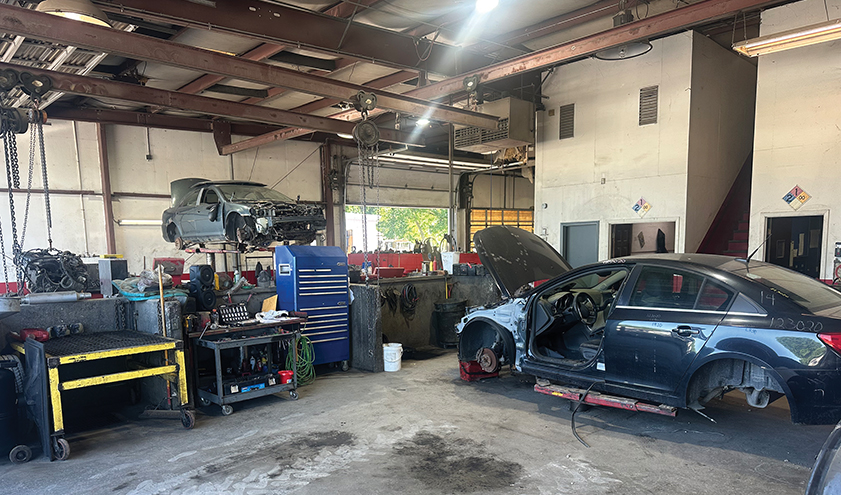
In 1987, my wife and I partnered with John in A&A Auto Salvage, and in 1996, we bought out John’s shares and became the sole owners. At that time, we decided to rename the company A&A Auto and Truck Parts, Inc. to reflect our focus on quality auto parts and customer service.
Like many in our industry, we experienced the challenges of evolving technology and changing operating systems. Through it all, we stayed true to a simple philosophy: “buy cars, sell parts,” while maintaining strong relationships with our customers and community.
In 1997, John Lewis passed away, and his sons continued operating Lewis Auto and Truck Parts at my father’s original location. When they later chose to sell the business, we purchased it in 2018, bringing 229 NE Burgess back under our umbrella. John’s son, Nick, has stayed on as a sales manager with A&A which has strengthened our family-based culture and he holds an instrumental role in our daily success. Several of the original buildings my father constructed still stand today—a meaningful connection to our beginnings.
As a family-owned business, our daughters have each played a role over the years. A major turning point came when our daughter Heather joined the company full-time. Starting as office manager, she gradually learned every aspect of the operation and helped lead us into more modern systems and streamlined processes.
Her contributions have been instrumental in shaping the company we are today.
Today, A&A Auto and Truck Parts reflects decades of hard work, family dedication, and a commitment to serving our community—bringing our story full circle.
AR: How has the business evolved over the years in terms of size, capabilities, and the types of vehicles or materials you process?
Lewis: Over the years, our business has grown significantly in both size and capability. We began with a single location and a small team of six employees. As demand increased, we relocated, expanded by acquiring an additional location, and eventually had the opportunity to purchase our original site back—bringing our growth full circle.
Today, we operate with a team of 21 and have expanded our reach through multiple delivery routes, serving on both daily and weekly schedules. Alongside this growth, we’ve made strategic investments in our operations by joining Team PRP, transitioning to the Pinnacle YMS, and implementing EZ Suite to strengthen our quality control
and internal processes.
We are also active members of ARA and URG and are proud to be an ARA Certified Automotive Recycler (CAR). That certification has been instrumental in holding us accountable to the highest standards in our general business practices, environmental responsibility, safety, and quality control.
These advancements have allowed us to handle a higher volume of vehicles and materials while improving consistency, efficiency, and overall service for our customers.
AR: What have been some of the key milestones or turning points that shaped your growth and long-term success?
Lewis: Several key milestones have played a significant role in shaping our growth and long-term success. One of the most impactful has been the acquisition of the three properties we currently operate out of in Topeka, KS. Our original property at 229 NE Burgess is connected to the second property we acquired as A&A at 1831 NE Grantville, and we have since expanded further by purchasing additional acreage—bringing our total yard size in North Topeka to nearly 30 acres.
Looking ahead, our plan is to construct a new dismantling facility and consolidate all operations into this North Topeka location. While our South Topeka property has been an important part of our history, it is a five-acre, land-locked site located just three miles away. By bringing everything under one roof, we will streamline customer pickups, improve delivery timelines, and operate more efficiently overall.
Other major turning points include our transition to Pinnacle, our joining Team PRP, and implementing the EZ Suite. These systems have significantly improved our ability to monitor performance, procure parts for our customers, enhance communication with customers through more timely access to photos and information, and ensure accountability across our team by promoting consistency and accuracy in daily operations.
Each of these decisions has helped position us for continued growth while strengthening the level of service we provide.
AR: What core services and products does the company offer today, and how have those offerings expanded or shifted in response to market demand?
Lewis: Today, our core services center on supplying high-quality recycled automotive parts to both wholesale and retail customers, supported by a strong, reliable delivery network. In response to growing demand, we have expanded our delivery capabilities by establishing more consistent routes and investing in new delivery vehicles. This has allowed us to operate more efficiently and handle larger volumes of product.
Over the years, we have shifted our focus more toward our wholesale customers, while maintaining strong relationships with our retail customers and staying closely connected to our local community. That balance remains important to us, and we continue to prioritize service at every level.
A key part of our growth has been building a team that genuinely cares about the work we do and the quality we provide. Our employees are vital to our success, so we place a strong emphasis on equipping them with the training, tools, and resources they need to perform at a high level.
We also regularly evaluate our performance through internal reviews and self-auditing to identify opportunities for improvement while reinforcing what we do well.
Ultimately, our approach is to evolve alongside our customers. By actively listening to their needs, we’re able to adapt our services, refine our processes, and ensure we continue delivering value in a changing market.
AR: How has the rise of newer vehicle technologies – such as electric vehicles and advanced driver-assistance systems—impacted your operations and inventory?
Lewis: We stay away from EVs for now. Our market has not called for us to take that path quite yet, but we know demand will grow. As we build our new building, the requirements for handling EVs will inform how we structure our dismantling bays and processing areas. We work with hybrids and work to keep our employees trained and processes safe.
AR: What role does technology play in your business today, whether in inventory management, parts sales, or dismantling processes?
Lewis: We utilize Pinnacle and EZ as the backbone of our yard management system, allowing us to efficiently manage inventory, track production, and maintain clear communication with our customers.
We have also implemented digital pricing tools, which have been a game changer in our ability to accurately price a larger volume of parts while remaining competitive in a dynamic market. In addition, we upgraded our phone system to provide detailed reporting on inbound and outbound calls, as well as call recording capabilities.
This has become a valuable tool for both training and ensuring accuracy in customer interactions.
The implementation of EZ has had the most significant impact on our operations. It has greatly strengthened our quality control processes and dramatically improved communication between our sales team, production staff, and customers. As a result, we’ve seen increased efficiency, better consistency, and a higher level of service across the board.
AR: Workforce development remains a challenge across the industry—how are you attracting, training, and retaining skilled employees?
Lewis: Workforce development continues to be one of the industry’s biggest challenges, and we’ve taken a very intentional approach to attracting, training, and retaining the right people. While finding skilled employees can be difficult, our focus is on hiring individuals who not only have the ability to do the job, but also align with our company culture and values.
Every new team member goes through a structured onboarding process that includes position-specific training in safety protocols, equipment operation, general procedures, communication, and customer service.
As our industry continues to evolve with technology, we’ve also placed a strong emphasis on ensuring our employees are comfortable using digital platforms and mobile applications, which are now essential tools in our daily operations.
We strive to build a team of positive, motivated individuals who contribute to a strong, tight-knit work environment. We’ve also been fortunate to retain several key staff members who have been with us for many years, which speaks to the culture we’ve worked hard to create. Beyond the workplace, we enjoy celebrating holidays and spending time together as a team, which helps strengthen those relationships even further.
Ongoing development is just as important as initial training, so we hold weekly departmental meetings to provide continued training, address challenges, set incentive goals, and recognize team successes.
By investing in our people and setting clear expectations, we’ve built a team that takes pride in its work and plays a key role in our continued growth.
AR: Sustainability is central to automotive recycling—how does A&A Auto & Truck approach environmental responsibility and resource recovery?
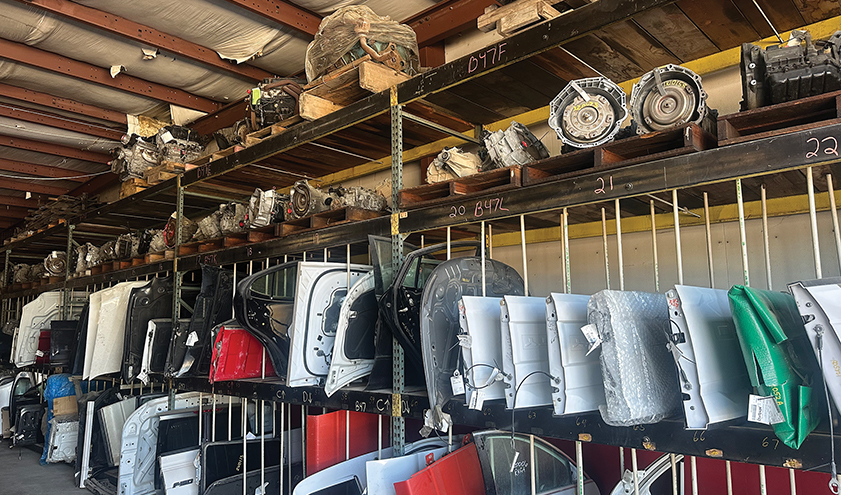
Lewis: Sustainability is a core part of what we do, and we take our responsibility to the environment very seriously. Being ARA CAR Certified has been the key tool to help us maintain high standards and hold ourselves accountable in our environmental practices. Working closely with industry experts like Sue Schauls has also played an important role in ensuring we stay aligned with best practices and continue to improve.
We operate in strict accordance with CAR Certification guidelines, as well as our Stormwater Permit and Stormwater Pollution Prevention Plan. These frameworks guide how we manage fluids, materials, and overall site operations to minimize environmental impact and promote responsible resource recovery.
At the end of the day, automotive recycling is about extending the life of materials and reducing waste, and we are committed to doing so in a safe, compliant, and environmentally responsible way.
AR: What sets the company apart from other recyclers in the region, and how do you maintain strong relationships with customers and partners?
Lewis: What sets us apart is that we are a small, family-owned business that genuinely prioritizes customer loyalty and satisfaction. That personal investment shows in how we operate day to day—we’ve worked hard to build a business that is clean, safe, organized, and reliable, which our customers and partners can consistently depend on.
At the same time, we are committed to growing with the industry. By embracing new technologies and continuously improving our processes, we’re able to better serve both our employees and our customers while staying competitive in a changing market.
We maintain strong relationships by being responsive, transparent, and consistent. Whether it’s clear communication, dependable delivery, or standing behind the quality of our products, we focus on doing the small things right. That combination of personal service and forward-thinking operations is what continues to set us apart in our region.
AR: Looking ahead, what opportunities and challenges do you see shaping the future of your business and the automotive recycling industry as a whole?
Lewis: We are excited about the continued growth and expansion of our business. We see technology as one of the greatest opportunities shaping our future, and we
are actively embracing it as a tool to improve efficiency, communication, and overall operations rather than viewing it as a challenge—which it can be at times.
One of the biggest industry-wide challenges we anticipate is the continued rise of EVs. While EVs are not yet a significant part of our local market, we know that will change over time. We are already planning ahead so we can adapt our processes, training, and infrastructure as needed when that shift reaches our region.
Overall, we view the future as an opportunity to evolve. By staying proactive, flexible, and committed to continuous improvement, we are confident we can grow alongside the industry and continue serving our customers effectively.

Based in Minneapolis, Minnesota, Maura Keller is a seasoned writer, editor, and published author, with more than 20 years of experience. She frequently writes for various regional and national publications.