ARA aligned with Plasnomic’s mission to create standardized plastic repair methods
By Stacey Phillips Ronak

Plasnomic is transitioning from evaluation into publishing formally-governed industry best practices. The initial focus will be on polypropylene bumper repairs, which Driehorst said reflects the most common and highest-impact plastic repair category globally.
In early 2025, Plasnomic was formed as a global initiative focused on creating and certifying plastic repair best practices across the collision industry ecosystem. It stands at the forefront of automotive plastic repair, combining advanced processes and driving economic standards and compliance. The organization is dedicated to setting industry benchmarks in training, sustainability, and product innovation, ensuring the highest OEM-compatible standards in plastic repairs that contribute to a circular economy.
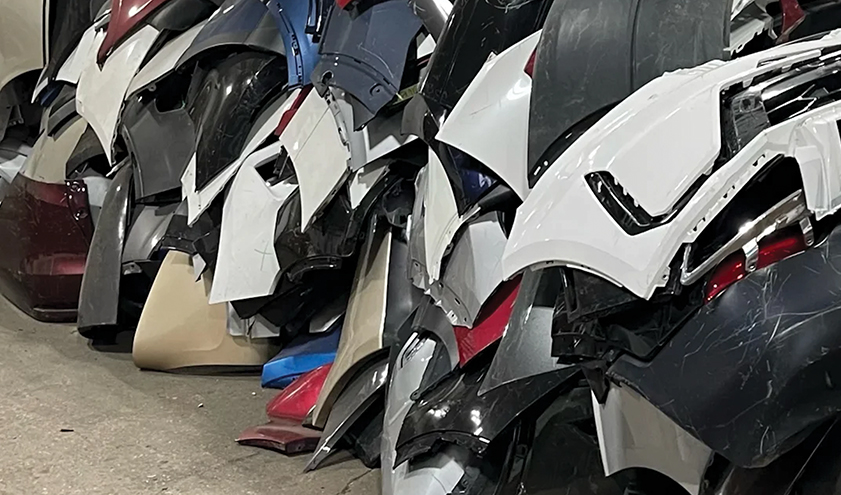
“With over 50% of collision claim replacement parts now made from plastic, the need for transparent and efficient repair processes has never been more urgent,” said Brian Driehorst, Plasnomic’s CEO.
By bringing together industry experts, specialty suppliers, and innovators worldwide, Driehorst said Plasnomic plans to shape a new era of repair solutions that enhance efficiency and reduce waste.
“Plastic repair has grown quickly, but repair methods, consistency, and trust have not kept pace,” noted Driehorst. “The future of collision repair and emerging materials is evolving, and plastic repair must evolve with it.”
Plasnomic’s first initiative was to form a global advisory board— the Plastic Repair Alliance Council—composed of leaders from all industry segments. It brings together plastic repair and collision experts, training bodies, specialty suppliers, OEM-related experts, insurers, auto recyclers, and sustainability leaders. Led by Head of Council Mario Dimovski, the council’s goal is to collaboratively define and refine best practices and create universal standards for plastic repair through innovation, research, and sustainability efforts. It will also provide guidance on safe, repeatable, and insurable tools, materials, and processes.
“If repair first and circularity are going to work at scale, everyone involved with plastic parts needs to be aligned on what good looks like and how to deliver it consistently,” Dimovski said.
Since its formation, the council has worked to gather information from every continent to eventually create universal best practices for plastic repair, which will be shared globally.
ARA Involvement
Vince Edivan, executive director of the Automotive Recyclers Association (ARA), joined the alliance as its representative in 2025. “I was motivated to join Plasnomic’s global council because of its forward-looking approach to plastic repair and sustainability,” noted Edivan, who has worked with multiple segments of the automotive industry, focusing on vehicle lifecycle management, remarketing, recycling, and industry education. In addition to his operational roles, Edivan has supported automotive service and technology companies and has been actively involved in industry communications.
“My experiences have given me a broad, practical understanding of the challenges recyclers face and how policy, standards, and collaboration can help move the industry forward,” he said.
Prior to being named ARA’s executive director in 2024, Edivan was involved with ARA for many years. He formally joined the staff in 2019 as the director of member relations, where he represented the association at state and national industry events, worked directly with members, and supported the association’s education, communications, and outreach initiatives.
In his current role, Edivan oversees ARA’s strategic direction, operations, and industry partnerships, while continuing to contribute editorial content and thought leadership.
Since joining the Plastic Repair Alliance Council, Edivan has found that its stakeholders are working to address an important industry gap: how plastics are evaluated, repaired, and reused.
“That collaborative, best practices-driven mindset aligns closely with ARA’s mission to promote safe, environmentally responsible, and economically viable recycling practices,” he shared.
He said auto recyclers are a critical part of the vehicle lifecycle, especially for reuse and material recovery.
“It’s important for ARA to be involved in this issue so the recycler perspective is represented as best practices for plastic repair are developed,” he emphasized. “By participating in the council, we can help ensure that these initiatives are practical, scalable, and beneficial not only to collision repairers, but also to recyclers who handle plastic components every day.”
He said that early involvement also helps create alignment across the supply chain, rather than addressing recyclers as an afterthought.
“The goal of establishing universal best practices is an important step forward for the industry,” Edivan acknowledged. “Clear, consistent guidelines can help reduce unnecessary waste, improve repair decision-making, and increase confidence in plastic repair and reuse.”
For auto recyclers, he said this could unlock greater value from plastic components, reduce disposal, and create new opportunities for collaboration with the collision repair sector.
“Ultimately, standardized approaches support a more circular and sustainable automotive industry—something that benefits recyclers, repairers, insurers, and consumers alike,” Edivan added.
Driehorst agreed that recyclers are critical to making repair and circularity work in the real world.
“This is why ARA’s involvement is so important,” he said. “ARA represents the operational and regulatory backbone of the recycling industry.”
If repaired and refurbished plastic parts are going to reenter the market at scale, Driehorst said that recycler realities must be built into the standard from the beginning.
“Vince brings that perspective [of the automotive recycler], helping ensure that grading, reconditioning workflows, quality expectations, and adoption challenges are addressed in a practical way that the industry can actually implement,” explained Driehorst. “His role helps bridge the gap between repair standardization and recycled part acceptance by insurers and OEMs.”
As Plasnomic continues its focus on creating plastic repair best practices, Edivan noted how its initiatives offer practical opportunities for auto recyclers.
“Plastic repair and refurbishment becomes more consistent and defensible, reducing variability and returns,” he commented. “It becomes easier to scale because training and certification pathways support repeatable reconditioning operations.”
In addition, Edivan said market confidence will likely improve because buyers will have clearer criteria to trust repaired and refurbished plastic parts.
“Most importantly, more plastic stays in use and out of waste streams, allowing recyclers to retain more value in the parts they handle,” he shared. “In simple terms, parts that would have been scrapped due to cosmetic damage, broken tabs, or minor cracking can now be repaired, verified, and sold with confidence.”
Dimovski noted that the biggest issue holding plastic repair back today is inconsistency.
“Outcomes depend too much on who performs the repair, what method they choose, and where the work is done,” he explained. “That uncertainty drives risk, liability concerns, and default replacement decisions.”
Universal best practices, according to Dimovski, introduce clarity around what is repairable and what is not, create repeatable processes, and establish predictable quality outcomes.
“That consistency builds insurer and OEM confidence, supports scalable repair programs across large networks, and helps move plastic repair from a specialty skill to a dependable industry process,” he added.
Driehorst mentioned how auto recyclers already influence repair-first outcomes by supplying used OEM plastic parts and increasingly reconditioning plastics to improve resale value and reduce scrap.
“The parts that enter the resale channel directly affect repair quality and road safety,” he noted. “Plasnomic strengthens this role by giving recyclers clear repairability boundaries, defined process guidance, and alignment with body shops and insurers on documentation and quality expectations.”
Ideally, Driehorst said that repairs will be tied to material identification, so the repair method matches the plastic and its intended function. Damage will be classified to ensure only appropriate repairs are performed, and fit, shape, and mounting integrity will be verified to ensure parts install correctly.
“Each repaired or refurbished component will follow a controlled and documented process that includes inspection before and after the repair, defined tooling and repair rules, and traceability back to the technician and method used,” he shared. “Benchmarking and testing at a category-level support confidence that approved repair methods perform as intended, and Plasnomic already is working on tech solutions to achieve these goals.”
The result, according to Driehorst, will be a controlled and auditable pathway for repaired, recycled plastics to safely re-enter the market, creating new value for recyclers while reducing replacement costs and plastic waste across the industry.
Plasnomic’s Core Priorities
Technical Validation: A core priority for Plasnomic has been the structured evaluation of existing plastic repair processes, products, and equipment.
To support this effort, Plasnomic has developed mobile and web-based testing tools. These enable digital process documentation, repair traceability, and future certification support for scalable deployment.
Digitization: In addition to the mobile application, central to Plasnomic’s digital strategy is the Plastic Repair Intelligence, Standards, and Marketplace (PRISM) platform. Currently in beta development, PRISM was designed to be the digital backbone of plastic repair in the collision industry, supporting technician engagement, product grading, expert-led validation, knowledge sharing and the deployment of standardized training across global markets.
“PRISM reflects Plasnomic’s commitment to combining expert knowledge with data-driven validation, ensuring repair practices are both technically sound and practically achievable,” said Driehorst.
Sustainability: One of the key drivers of Plasnomic’s focus is sustainability. The organization has initiated circular waste and plastic diversion programs in collaboration with MSOs, government bodies and OEM partners. Driehorst said these efforts align closely with plastic waste management, landfill diversion objectives, and insurer environmental, social, and governance (ESG) commitments.
By validating plastic repairs that allow components to perform as intended, Driehorst said the global alliance supports meaningful reductions in plastic waste while maintaining safety, quality and cost efficiency.
Lab Testing: Plasnomic has already begun lab testing of available plastic repair products in an OEM-aligned laboratory setting. Driehorst said this testing, combined with commercial-grade equipment, allows for a controlled evaluation of materials, repair processes, cost performance, advanced driver-assistance systems (ADAS) compatibility, and real-world repair outcomes.
“This approach ensures that Plasnomic recommendations are backed by independent validation as well as field-based evidence,” he noted.
Looking ahead, Driehorst said Plasnomic has two main priorities: defining the right way to repair plastic and helping the industry adopt those practices with confidence.
“We are developing and validating global best practices for plastic repair that are documented, repeatable, and evidence-informed,” stated Driehorst. “At the same time, we are aligning training and certification direction so technicians, recyclers, and providers around the world are working to the same expectations.”
Plasnomic is also identifying and qualifying the right tools, materials, and repair methods, with OEM compatibility and safety in mind. Alongside this work, team members are hoping to expand their global mission by inviting repairers, recyclers, trainers, and manufacturers to participate and help drive adoption.
This year, Plasnomic is transitioning from evaluation into publishing formally-governed industry best practices. The initial focus will be on polypropylene bumper repairs, which Driehorst said reflects the most common and highest-impact plastic repair category globally.
Validation will concentrate on the five most prevalent damage types; results will be guided by laboratory testing and supported by field-based validation conducted by Plasnomic’s technical ambassadors. Driehorst said these plastic repair champions from around the world will play a critical role in translating technical outcomes into practical, repeatable repair standards.
Best practices are expected to follow with support from MSO partners and global training bodies, utilizing PRISM’s digital knowledge and repair certification tools.
As Plasnomic expands its collaborative reach and begins validating processes, products, and equipment featured within the PRISM platform, Driehorst said the organization will take a leading role in representing and promoting approved and preferred solutions across its distribution network and MSO partners. These offerings will be positioned as best-in-class options for safe, consistent, and high-quality plastic repair.
“This is not about reinventing the wheel,” stressed Driehorst. “It is about taking what works, proving it, and giving the industry a clear and trusted path forward.” Learn more at https://plasnomic.com/about-us/
Plasmonic Elevates Reuse of Automotive Plastic Parts
Plasnomic is transforming plastic repair in the collision industry by establishing global standards, certification, and compliance. With plastic parts accounting for more than half of all collision claim replacements, ensuring consistency, quality, and sustainability in repairs is critical. Yet, variations in repair methods, inconsistent training, and widespread part replacements have led to inefficiencies, increased costs, and unnecessary waste. Plasnomic is addressing these challenges by creating a unified repair framework that aligns with OEM standards and sustainability goals while incorporating the latest innovations in materials and technology.
A key focus of Plasnomic’s mission is integrating sustainability into collision repair by shifting the industry toward a repair-first mindset. Millions of tons of plastic waste are generated every year as damaged parts are discarded instead of restored. Insurers and repairers often default to part replacement due to a lack of standardized repair incentives. Plasnomic is working with Collision Shops, Training Bodies, OEMs, and regulators to promote high-quality repairs as a viable and cost-effective alternative.
Training and certification play a crucial role in this transformation. Existing training programs in the collision industry often rely on outdated or costly techniques that do not align with modern plastic repair needs. Plasnomic is developing structured, globally recognized training that equips technicians with the latest repair methods, developed by industry professionals and plastic repairs experts.
Innovation in repair materials and technology is at the forefront of Plasnomic’s. By leveraging advanced materials, AI, additive manufacturing and automation, Plasnomic is creating a smarter, more scalable approach to plastic repair.
Through collaboration, innovation, and education, Plasnomic is leading the transformation of plastic repair, ensuring that it becomes a critical and respected part of the collision repair industry.

Stacey Phillips Ronak, owner of Radiant Writing & Communications, is an award-winning freelance writer and editor based in Southern California.
Over her career, she has written for multiple industries and currently focuses on automotive and technology articles. Stacey has co-authored two books, including “The Secrets of America’s Body Shops.” She is passionate about creating balanced, relevant and inspiring content to educate others.