Auto recycling in the near and distant future.
By Caryn Smith

The outlook for automotive recycling will not be defined by a single issue. Operators today are getting much better at using their best instincts to stay ahead of marketplace changes, as well as at turning to peer groups and industry experts for help, clarity, or ideas. Yet the new automotive economy is raising the bar, requiring flexibility, decisiveness, and adaptation to a marketplace that is rapidly reshaping due to advances in technology, workforce challenges, economic uncertainty, and unknown factors that rise from nowhere.
Prior to the surge in electric vehicles and the COVID pandemic, the industry operated at a consistent, predictable pace. Auto recyclers forecasted and developed 1-, 5-, and 10-year plans, budgets, and goals.
The formula was likely one or more years of data minus facility-centered obstacles, such as production and workforce deficits, as well as costs of goods and goals, yielding a clear plan of action. Mid- to long-range plans and projections may not be as easy to develop now, given the shifting business climate facing the industry.
Automotive Recycling magazine asked auto recyclers to share their perspectives on the future.
What’s In Store for the Next 5 Years?
“One of the biggest challenges will be predicting long-term goals,” says Michael Carcone, Carcone’s Auto Recycling & Wheel Refinishing, a full-service recycler in Aurora, Ontario. “Traditional 5-, 10-, and 25-year plans are rapidly becoming much shorter-term—more like 5-, 10-, and 25-month plans. The pace of change in AI and technology is accelerating, requiring businesses to adapt more quickly than ever before.”
“Industry technology is a determining factor of success,” says John Catalano Jr, Bionic Auto Parts & Sales Inc., with full-service locations in Chicago, IL, and Milwaukee, WI. “As these tools mature, they have the potential to create meaningful efficiencies across operations, from inventory management to sales and logistics.
“Our industry is largely led by experienced professionals, many of whom have built their success on proven methods, so driving widespread adoption of new technologies
may require a cultural shift as much as a technical one.
That said, this challenge also presents a significant opportunity,” says Catalano. “Historically, the auto recycling industry has demonstrated a strong ability to adapt when there is a clear financial benefit. I believe that will continue to be the case. As long as new technologies are practical, scalable, and positively impact the bottom line, our industry will embrace them and evolve accordingly.”
With a pragmatic view, David Gold, Standard Auto Wreckers, two full-service locations in Scarborough and Port Hope, and a parts depot in Ottawa, Canada, says, “The auto recycling industry is going to be just fine over the next five years. At its core, our business is straightforward—we buy vehicles and sell parts. There is no single ‘right’ model, and that diversity is one of our strengths.
As recyclers, we are often reacting to changes after they’ve already occurred—we don’t design the vehicles, but we must adapt quickly to understand, dismantle, and resell increasingly sophisticated components.”
Unsavory operators present a potentially impeding threat, says Gold. “A key challenge will be dealing with the underground economy and non-compliant operators who continue to impact legitimate businesses.” A counterpoint to this is the greater opportunity for engaged professionals. “Those who are involved in their associations—ARA, URG, and regional groups—and who are committed to learning and evolving will continue to grow and thrive.”
A Little Perspective
Where We Were In the Year 2000?
Michael Carcone, Carcone’s Auto Recycling & Wheel Refinishing
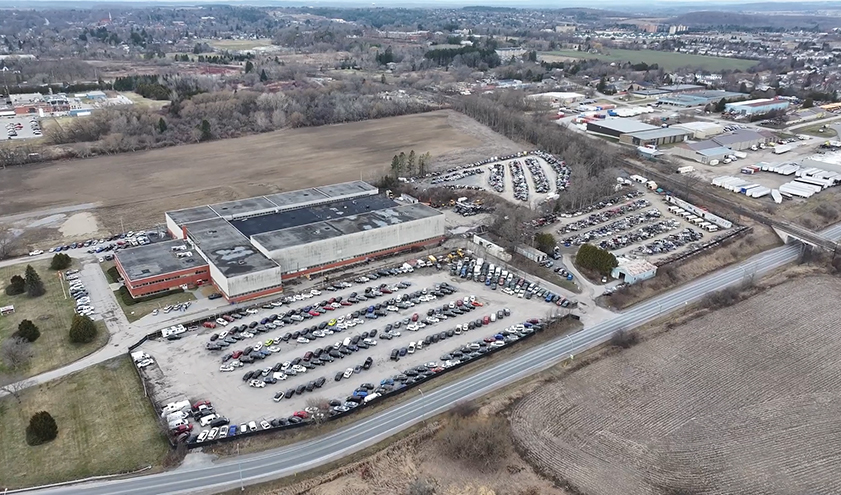
In 2000, we had around 30 employees versus 50 today. We bought at a single local auction using a manual process to calculate the bid. We had 4 delivery trucks then, versus 8 today.
No social media. Communication was done primarily by phone, fax, or face-to-face. If I recall correctly, hybrid or electric cars were not a concern. Airbags and ABS systems were emerging concerns that were still unknown. Decisions were made on the spot, based on educated, manual judgment. Scale was limited by geography and manpower.
Another growing threat will be the lack of qualified staff. Jake Nawrocki, Rocki Top Auto, a full-service operator in Glen Flora, WI, says, “We’ve been fortunate to hire and retain some great people. But, as we advertise for open positions, the work is becoming more specialized. It used to be that you hired someone to take a car apart or clean up scrap metal. Now, we need them to do very specific things and to be cautious, detail-oriented, and willing to do this work. It is going to become one of the most difficult things for us, and I think that is universal across the industry.”
Vehicle technology will also continue to be a learning curve. “A few years ago, there was so much energy directed at electric vehicles and what they were going to mean for the industry,” Nawrocki continues. “That discussion has dropped off, not because EVs are less relevant, but because the fear is subsiding. EVs are not going anywhere; we are just getting used to the idea. Big problems create big opportunities.”
For the self-service industry, Lloyd Welty, Pick-N-Pull, Inc., in San Antonio, Texas, says, “One of our biggest challenges will be hybrids and electric cars. We are already starting to buy vehicles like Volts, and the batteries are harder to manage.”
With that said, Welty believes, “The parts opportunity will still be regular body parts. But there will also be growth; there are components we do not yet fully understand how to price. Newer vehicles with newer engines are introducing parts that we have not seen before,” he says.
One trend he sees is that customers are using the self-service vehicles to learn how to work on their own cars. “For example, they may pull an alternator in the yard so they can see how to install one on their own vehicle. We see alternators lying around on the ground.”
A Little Perspective
Where We Were In the Year 2000?
Jake Nawrocki, Rocki Top Auto

In 2000, I had thicker hair, and none of it was gray.
Back then, we had two bays for dismantling cars, and that same space was also where we inventoried cars, shipped parts, answered the phone, and did everything else. Our facility was an old dairy barn with a shop built onto the side, and we did everything out of that little building.
The majority of the vehicles we ran through were scrap metal. We did very few used parts sales, and almost all of them were local. It was the farmer down the road who needed a carburetor. We had no online selling.
In 2000, we may have just started doing that, but we were doing virtually none of it. It was just my dad and me working here.
Now we have four dismantling bays. We have two full-time salespeople, with a couple of others who pick up the phone when it is busy. We have three people in shipping, a couple in inventory, and a couple driving delivery trucks. It is amazing how much has changed in what feels like a short time.
I know 25 years is a long time, but it really is not. It went by quickly.
A Little Perspective
Where We Were In the Year 2000?
Lloyd Welty, Pick-N-Pull, Inc.
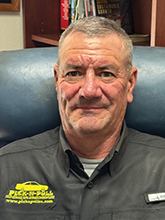
I was in the military in 2000.
I came into this industry in 2008. Back then, the business was smaller. Cars were cheaper, so we bought more of them. We kept expanding and improving our processes. At that time, all we had was a crusher. In 2010, we bought an auto dismantler. In 2011, we bought a baler. In 2013, we bought another auto dismantler. We also had more wrecker drivers back then. The yard has been added to twice since I have been here. We had about 2,500 cars in the lot then, and now we have over 4,500.
Welty sees a time when self-service operators will perform more full-service work.
“Currently, our eBay team also prepares used cars to be sold. When we find a good engine, we pull it, palletize it, and advertise it for sale along the walkway to the yard. They are selling well. The customer pays for it, and we deliver it to the front and load it for them. We also offer a part-puller service that a lot of people use.”
The Next 10 Years Could Bring Profitable Opportunity
“Over the next 10 years,” says John Catalano Jr, “I believe there will be major opportunities for recyclers to make real money, especially for those who recognize the true potential of emerging technologies and recyclable materials. As vehicles continue to evolve, so will the value and complexity of the parts we handle.”
He warns that this era will not reward the slow or the stubborn. “It’s going to come down to who can run the most efficient operation—processing, inventory, and sales all must be tight. The recyclers that embrace change, invest in the right tools, and stay disciplined will win. The ones that don’t will get left behind. It’s that simple.”
David Gold agrees. “Ten years is a long horizon, but the fundamentals remain consistent: opportunity will exist for those willing to adapt. We may see increased OEM involvement in our space, which could create both challenges and opportunities. It’s important that we approach this with open minds and a collaborative mindset. If handled properly, OEM engagement could elevate the industry and create new pathways for growth.”
“Technology will continue to be a defining factor,” says Gold. “Whether it’s AI, robotics, or advanced data systems, recyclers will need to better understand and integrate new tools. The idea of robotics assisting in dismantling vehicles may not be too far off.”
He says that the biggest challenge will be keeping pace with vehicle technology. “As vehicles become more advanced, so must we. This is where collaboration becomes critical: leaning on one another, sharing knowledge, and working through our associations to protect and advance the interests of professional recyclers.”
When considering new customer potential, “There is a huge opportunity with the younger generation learning to do things themselves on YouTube or TikTok,” says Amber Kendrick, Pete’s Auto Parts, a full-service recycler in Jenison, MI. “The tide has turned, and I see more DIY repairs and more industrious young, hard-working staffers than I have in two decades.”
For the self-service sector, Lloyd Welty sees it a bit differently: “I think our average customer age could become a challenge. Younger customers—late teens, 20s, and early 30s—do not work on their cars the same way older generations did. That means our customer base may start to shrink unless we get better at promoting ourselves and bringing in younger customers. We need to educate them and show them how self-service works.”
The Long Scope of 25 Years
“The automotive recycling and transportation landscape will likely be dramatically different from what we know today,” says John Catalano Jr. “We may be dealing with entirely new forms of mobility, whether that’s advanced electric platforms, autonomous systems, or technologies that haven’t yet been fully realized.”
The industry will continue to move away from traditional gasoline-powered vehicles toward more complex, technology-driven systems, bringing both positives and negatives for recyclers, he predicts. Adapting to new vehicle designs, materials, and components will require ongoing investment in training, equipment, and processes. Additionally, it will create new avenues for growth as different types of parts and systems enter the recycling stream.
A Little Perspective
Where We Were In the Year 2000?
David Gold, Standard Auto Wreckers
Photo: Include David’s headshot in this section
Back in 2000, we were just one year into Pinnacle and beginning to find our footing. At that time, we operated a single location and were preparing to expand, opening shortly thereafter in Niagara Falls, NY, followed by growth into Ottawa and Port Hope.
Looking back, it’s incredibly humbling. What started as a focused effort to build something meaningful has grown into a multi-location operation, shaped by great people, strong partnerships, and a shared passion for this industry. It has been a rewarding journey—and one I’m excited to continue for many years ahead
A Little Perspective
Where We Were In the Year 2000?
Amber Kendrick, Pete’s Auto Parts

I was a junior in high school; I was homeschooled, and I did school in the morning and worked part-time at Pete’s for a couple of hours a day in the afternoons that year and made $5,396 at $9 per hour. Pete’s was selling about 160k a month in 2000; now if we sell that in a week, we’ve had a terrible week.
“From a business standpoint, long-term success will depend heavily on strong succession planning,” says Catalano. “My goal is to ensure that the next generation is equipped with a solid foundation, the right structure, and clear direction to continue building on what we’ve established to carry the family legacy forward. If things keep evolving at this pace, maybe they’ll be recycling something a lot more advanced than cars by then. Hopefully, I’ll be watching it all from a distance and enjoying retirement.”
While there are many unknowns about the future, one thing is certain for David Gold: “Vehicles will remain an essential part of our culture, and auto recyclers will continue to play a vital role in the circular economy.” Therefore, the industry must remain engaged, informed, and adaptable to be part of the solution—environmentally, economically, and socially.
Looking ahead, Gold sees the potential for vehicles and/or parts to become overly proprietary. This could limit the reuse of recycled OEM components and represent a significant environmental step backward. The industry needs to remain united to counter such efforts.
“Overall, I remain optimistic,” says Gold. “This industry has always found a way to evolve, and I believe the next 25 years will bring innovation, growth, and new opportunities we can’t yet fully imagine.”
Looking ahead, Jake Nawrocki sees regulatory issues as a significant challenge. “Looking at current world politics, it is easy to imagine really overreaching government efforts that could make our business difficult.” Yet, he has faith in the next generation to handle it.
“I also think our customer demographic will change dramatically because of vehicle technology,” he continues. “We are already seeing it. The same person who used to buy parts to fix their own car isn’t always doing so anymore. Their car may no longer be fixable by them, and that is not going to get easier.”
Amber Kendrick shares, “Hopefully, both full-service and self-service automotive recycling will become known in popular culture, and we will have the opportunity to save more people money, reuse valuable resources, and keep cars on the road longer!”
A Little Perspective
Where We Were In the Year 2000?
John Catalano Jr, Bionic Auto Parts & Sales, Inc.
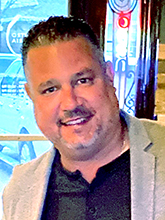
I was always at the yard in some way or another, but I started full-time in the industry in 1996 at Bionic Auto Parts in Chicago, working at the front counter in retail sales.
I was working with my dad, John, and uncle Tony, and got to experience a little bit of my grandfather Frank back then; talk about some stories for another time. Back then, we were running on the old Hollander system—HYMS—and everything was a lot more manual than it is today.
The business was simpler in some ways but also tougher. You had to know your parts, know your customers, and grind it out every day without the technology we rely on now.
There was a lot more street hustle involved in selling a part. Since then, the industry has changed dramatically. Technology, inventory systems, and customer expectations have all evolved, and you’ve either had to adapt or get left behind. We’ve adapted—and we’re still here.
Final Thoughts
“For us, it has probably only been in the last 10 years that we have gotten really involved with ARA, and that has been a good thing,” says Jake Nawrocki. “That goes for certification, too. At first, I was not sold on its value, but since we became involved and started growing, I have come to see its importance.
“Also, there is business value, but there is also personal value. I personally have really enjoyed the opportunities we have had, and I have gotten to know some great people in the process. We are pretty excited to be part of it all.”
“People need to dig into the challenges and opportunities that are coming, because we are going to have both,” concludes Lloyd Welty. They also need to continue supporting their associations at the state, regional, and national levels. I see big technology coming on the horizon, especially with what CRUSH is doing. What they showed at the recent state show was amazing. For a morning meeting, I counted more than 100 people using self-service in the room, which is a big draw. As long as technology keeps coming at us, and people keep improving what they have, I think we will continue to survive.”
“The future of auto recycling is bright,” says David Gold. “While challenges exist—technology, regulation, and market dynamics—the opportunities are just as significant. We are a critical part of the circular economy, and the better job we do, the more society benefits. I remain passionate about this industry and committed to supporting fellow recyclers in any way I can.”
Getting Specific
Improving the daily grind is still at the forefront of any operator’s winning mindset. Big challenges exist. From workforce woes to adopting new technology, certification, and more, auto recyclers have a lot to think about to keep their operations’ processes seamless. Independent auto recyclers are the backbone of the oldest organized recycling initiative in history. With such roots in the automotive economy, there is no reason to assume it will not thrive in the far-off future. But it will require owners to rethink their business model. The resolve to compete is evident in our experts’ plans.
Staying Competitive
Michael Carcone: To remain competitive, I plan to act quickly and be willing to try new approaches. It is critical to recognize when something isn’t working and pivot without hesitation. Too often, businesses continue investing in failing initiatives rather than acknowledging the need for change. Success will depend on the ability to ‘pull off the band-aid’ quickly, learn from mistakes, and move forward with better strategies.
John Catalano Jr: Our plan to stay competitive is simple—run a tighter, smarter operation every single day. We’re constantly looking for efficiency: how do we improve how we do business without sacrificing customer service, quality, or accuracy? That part is non-negotiable.
At the same time, we’re always looking for opportunity—whether that’s expansion or tapping into markets we’re not fully reaching today. Growth is the goal, but it must be controlled and profitable. We plan to grow year over year, but not at the expense of the bottom line. Anyone can grow sales. The real question is, are you making money doing it?
David Gold: Our approach is simple: stay engaged, stay informed, and stay ahead of trends. We focus heavily on our people—supporting our team members and ensuring they have the tools and knowledge needed to succeed. At the same time, we invest in technology and systems to operate more efficiently and effectively. Being involved in the industry and maintaining strong relationships with peers, associations, and partners is also critical. The more connected we are, the better positioned we are to adapt.
Amber Kendrick: Staying involved in my state and national associations and attending industry conferences all help me stay abreast of market changes, new products or vendors, and legislation that may affect me, as well as connecting me to other recyclers who help me. I am in a Rob Rainwater group, and I find that to be an excellent way to stay competitive, hearing what other people have tried that has worked or not worked for them!
Lloyd Welty: We need to keep chipping away at it with new ideas to keep the yard competitive and profitable, especially as the economy improves. We will need to keep educating customers that we are here, available, and can save them money. We must also develop new and inventive ways to advertise. Everything is moving to streaming and digital platforms, so we must make sure we are there. I can see us hiring someone within the next five years to oversee our online advertising and optimize it to improve our performance.
Scaling for Growth
Jake Nawrocki: We are working on a plan to expand in the next 10 years. We just built a storage facility that we can grow into over time to scale. Right now, we are a small operation. We currently dismantle between 400 and 500 cars per year, and we hope to nearly double that in the next two years. We are well-positioned to grow, with four dismantling bays and the ability to add a fifth. We have the storage to eventually process about 1,500 cars per year, which is more of a 10- to 15-year plan.
Every time we decide that scale will automatically grow our business, we run into the challenges that come along with scale. Sometimes we find ourselves scaling back and going deeper into each vehicle so we can do fewer vehicles at a higher margin. We go back and forth, trying to balance our best margin with doing as many vehicles as possible.
I really like keeping our quality as high as possible. When we try to grow, increase output, or scale up, quality can suffer. That is part of what happens when you speed up or try to do more with less.
You never have exactly the right number of people. When we are in an uptick and busy, we always seem to be behind. People work faster and longer hours, and mistakes happen.
That is what I personally want to avoid. It is the reason we want to grow slowly—so we can maintain the highest possible quality and this is our biggest challenge.
Workforce Development
Michael Carcone: Continuous education and upskilling will be essential. Employees will need a deeper understanding of advanced systems, particularly as vehicles become more technologically complex. Investing in training will ensure our team remains capable, safe, and efficient.
David Gold: As vehicle technology advances, our workforce will need to evolve alongside it. This means more technical training, greater specialization, and a deeper understanding of electronic and software-driven components. We will need to attract and retain talent that is comfortable working with increasingly complex systems. Continuous education and upskilling will become even more important.
Lloyd Welty: Post-COVID through the end of last year, hiring was a struggle, but now it seems like more people are coming to us. The demand for higher pay will continue to rise, and we will have to hire more specialized people. The workforce is changing as well, with younger workers determining their own hours and being more likely to be late or not show up, making it harder to build consistency.
AI and Automation
Michael Carcone: AI and automation will serve as complementary tools rather than replacements. They will enhance our capabilities in several areas, including:
• Improving vehicle bidding and inventory processes,
• Supporting sales teams by handling overflow or after-hours inquiries, and
• Providing better data insights for decision-making.
Used effectively, AI will expand our “toolbox” and improve both efficiency and customer service.
John Catalano Jr: We will implement more automation across the operation in the future, along with increased use of handheld devices for testing and validating more complex components. Simultaneously, online sales will grow significantly. Customers want speed, accuracy, and convenience, and technology pushes everything in that direction.
AI is going to play a major role, especially on the customer service and phone sales side. It’s going to streamline processes, improve response times, and handle the bulk of the routine workload. This doesn’t eliminate people—it raises the bar. The workforce will shift toward more skilled, tech-savvy individuals who can manage systems, interpret data, and oversee more automated processes with less manual hand holding. The companies that lean into that shift and build the right team around it will have a major advantage. The ones that don’t are going to feel it.
David Gold: AI and automation will absolutely play a role, though it’s still early to fully understand how they will integrate into our day-to-day operations. This business has always had an element of “art” to it—judgment, experience, and intuition are still key.
However, AI is improving rapidly and will likely enhance areas such as inventory management, pricing, parts identification, and operational efficiency. I’m optimistic that these tools will complement what we do rather than replace it.
Amber Kendrick: Integrating AI into our business practices will be both a challenge and an opportunity! We use ARI through Auto Partnered Solutions to answer overflow and after-hours phone calls, and RingCentral to evaluate phone calls and help manage salespeople. I can foresee utilizing it for buying, pricing, inventory, and more. It could be very powerful in updating accounts, sending messages to lost customers, identifying problem accounts, and performing other business tasks.
Jake Nawrocki: We are experimenting with AI tools. Katie [Joles, business partner and sibling] handles all car buying, and she uses a tool to preview auctions, with mixed results. We tried an AI agent to augment our phone answering, but found it wasn’t as customizable as we would like. Instead, we hired another salesperson, and I think that will be much better for us. We will keep an eye on the future development of AI.
Lloyd Welty: We are currently researching AI technology for our phone system and website. It is a critical time right now to get started and not play catch-up. I believe it can help us with routing calls. If a customer wants a part price, ideally, the AI can access the database and provide that price out the door. That would provide our CSRs more time to answer car-buying calls. One challenge for us will be for the Spanish-speaking callers. In Texas, they often speak a hybrid of English and Spanish, so this is a consideration for automating calls.
Inventory & Sales
Michael Carcone: We anticipate a surge of new vehicle types entering the market. This will create more opportunities across the board. To adapt, we plan to deepen our inventory and broaden our offerings to meet the evolving demands of customers and the industry.
David Gold: Our core parts—the traditional top sellers—will remain important. However, we are already seeing increased value in technology-driven components, particularly ADAS (Advanced Driver Assistance Systems). As these systems become more prevalent, recyclers will need to develop the capability to properly handle, test, and market these parts.
Lloyd Welty: For self-service, inventory will be market-based. When I look at my inventory now, quite a few of our vehicles are 2019 and newer. We are already starting to get that newer inventory, and it will be interesting to see how quickly it sells. I think inventory will play a big role. Customers are more comfortable coming in for body parts, especially if they have a little fender bender and need something affordable. Keeping our inventory newer will help.
Technology-Related Parts
John Catalano Jr: I believe the future will bring increased demand for electronic components, including sensors, modules, and other advanced systems that historically were not widely resold in our industry. As vehicles become more technology-driven, these parts will represent a growing share of both inventory and revenue opportunities. To capitalize on this, recyclers will need to adapt by developing the capability to properly harvest, test, and reprogram these components if needed. This may require new processes, equipment, and technical expertise, but it also opens the door to higher-value parts and expanded product offerings. Those who invest early in understanding and managing these technologies will be well-positioned to capture new revenue streams as the market continues to evolve.
David Gold: ADAS components, sensors, cameras, and electronic modules will become more significant revenue drivers. To capitalize on this, recyclers will need better diagnostic capabilities, improved inventory systems, and potentially new partnerships to ensure these parts are properly calibrated and ready for reuse.
The Role of Certification
Michael Carcone: Certification is—and will continue to be—critical to our success. As vehicle technology becomes more advanced, proper training and certification are essential to ensure safety and competency. For example, working on electric vehicles requires specialized knowledge and safety protocols. Investing in certification ensures our team can confidently and safely handle new technologies.
John Catalano Jr: I strongly believe that certification plays an important role in both our current success and future. It helps elevate standards across the industry and creates a more consistent level of quality and accountability. Going through the certification process reinforces best practices, improves operational discipline, and builds greater trust with customers and partners. Ultimately, it’s a positive step not just for individual businesses but for the credibility and advancement of the automotive recycling industry.
David Gold: Certification has been a key part of our success and will continue to be moving forward. Programs like ARA Certified Automotive Recycler (CAR), the new ARA and URG Certified Automotive Recycler of Excellence (CARE) Program [formerly ARA Gold Seal], and Green Vehicle Disposal (GVD) have helped differentiate professional recyclers from less compliant operators. They also provide assurance to customers, insurers, and the public that vehicles are being handled responsibly. For anyone serious about long-term success, certification is essential.
Jake Nawrocki: We were the first yard in Wisconsin to get ARA Gold Seal Certified, and we were ecstatic about that. We are also ARA CAR, Recall, and HVV Certified. We did the work, and it paid off immediately. When eBay allowed airbag sales to certified recyclers, we had airbags on eBay on day one. We complete all the certifications we can.
Furthermore, I think it may become a determining factor in whether some businesses continue or close up. If regulatory issues become more challenging, certification will help us adapt more easily because we will already be doing what is expected. It also keeps us more accountable.
Amber Kendrick: For as long as I can remember, even as a teenager working part-time at Pete’s Auto Parts, we’ve always participated in the available certification programs, and we will continue to do that—it has always strengthened our business. I am not a fan of paperwork for paperwork’s sake, but the ARA CAR program and the Gold Seal program helped my business immensely. Soon we will have the combined ARA and URG Certified Automotive Recycler of Excellence (CARE) Program [formerly ARA Gold Seal], and I’m sure we’ll do that program as well, not only because it can lend credibility but because we find spot checking, auditing, having written policies, and then following up on those standards holds us to the highest level and helps us get better at what we do!

Caryn Smith is the editor of Automotive Recycling magazine and Automotive Recycling ToolBox Edition. She has been covering the industry for 25+ years. As a freelance writer, she is a contributor for other industry publications, such as Recycling Today, International Filtration News and International Fiber Journal, among others.