How JC and Holly Cahill have navigated their journey on both levels, sharing the lessons we can all learn from.
Interview by Vince Edivan

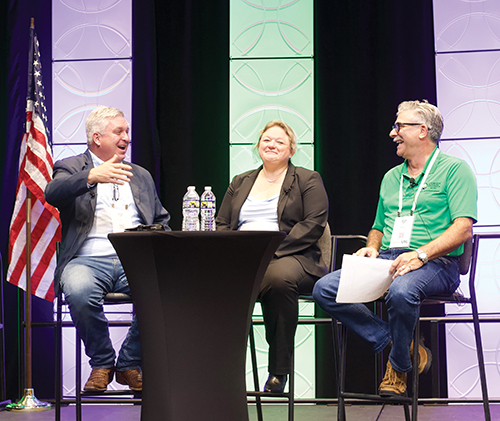
The following is an excerpt from the on-stage interview at the ARA 82nd Annual Convention and Expo of JC and Holly Cahill, who are longtime members of the automotive recycling community on many levels.
Vince Edivan: We want to focus on your partnership and how you successfully navigated successfully working together as business and life partners. First, share with us a little on how you met.
Holly Cahill: We met in 1998 in South Florida, where we dated for a significant time. Then JC moved to New York for work, and I stayed in Florida to complete college. Eventually, we knew we wanted to be together, but we were not sure where. I didn’t want to be in New York, and he didn’t want to be in Florida, so as a couple, we loaded up JC’s ‘97 rebuilt Thunderbird and headed west.
JC Cahill: We drove for about two months, working our way to the west coast one stop on the map at a time. We both had our college degrees, and we were rich with the world, with $4,000 in our bank account and the wind at our backs. Eventually, we settled in Oregon, and that was in 2000.
We both started our careers, with Holly at Coca-Cola and me in sales and auto recycling. Eventually, I was hired as a salesperson for LKQ and worked my way up to high-level sales. Then, I was recruited to run a facility in Seattle, Washington, called Fitz Auto Parts. They had a larger facility in Nevada that was struggling, so I was promoted to run it.
Vince: Obviously, you migrated back east; when and why did that happen?
JC: My dream was always to work in a family business.
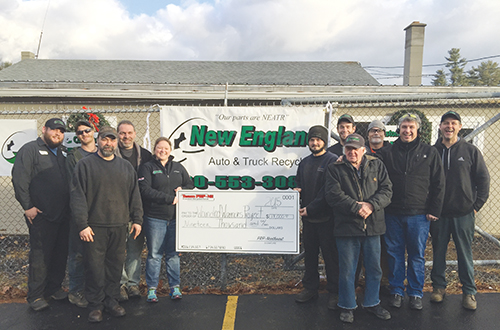
Fast forward to New England Auto & Truck Recyclers (“NEATR”) in Winchendon, Massachusetts. We ended up partnering with Mark and Joan Brown and purchasing an existing auto recycling facility, which we converted to a Brown’s Auto Salvage location.
Several years later, Holly and I were able to buy out the Browns from the partnership, and we created NEATR. In that process, we had hired a controller who eventually didn’t work out. Holly came on full-time as the controller and the main buyer and handled anything related to overhead.
Holly: We had always wanted to work together to build businesses, but timing was the issue. While establishing NEATR, I kept my corporate job until it was necessary that I be onsite day-to-day. That day came when the controller suddenly left. Before that, I was already spending time at the yard working with JC and with the team. During that process, we explored, ‘How do we do it? Is it the right thing?’ Ultimately, I really enjoyed the day-to-day of the business, as every day is different.
Vince: Did you all have any concerns about working together?
JC: We knew pretty quickly that this would work out; we enjoyed each other’s company. But that was probably our biggest fear, and we had a plan for ‘what if we work together, and it ruins our friendship and relationship.’ It can be difficult with two strong leaders running a company. We decided when we started that our relationship always was first over the company.
Vince: What challenges did you face?
Holly: As for challenges, I was trained in a corporate environment. I had to learn to implement rules and processes in a small business environment. I adjusted my expectations, especially when it comes to building and working directly with a good team, which was very important to us.
JC: Prior to working with the Browns and at NEATR, we had been employees for most of our work lives. We needed to define our ownership style. We incorporated the best practices of our previous bosses with what we learned from our mentors, as well as our combined work experiences.
Vince: What is your approach to being business partners and to building a team around you as owners?
Holly: We work to stay in our respective lanes.
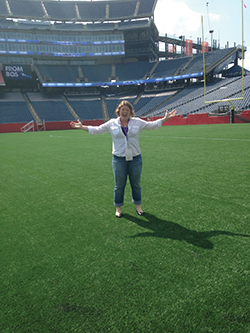
At NEATR, JC took on more of the big picture, vision, and sales, and I had buying duties and managed the office.
We also always had a very strong operations manager.
JC: You try to surround yourself with smarter people. There’s no doubt that my wife is not only my best friend but also an extremely smart businessperson. The one thing I would say is that Holly was excellent at bringing people around her who matched her energy.
We always tried to hire the best people we could.
Honestly, most of the time we hired people who were outside of our budget. We would take less to make it work. We hired high-caliber, high-integrity people we trusted, regardless of their industry knowledge. It wasn’t about experience; it was about the caliber of the person hired. That was successful for us.
We also agreed that the job paid what the job paid, and we paid ourselves as employees.
We were building a business for our future. We learned from the Browns and others who mentored us that we had a responsibility to care for the families we employed. At the height of the business, we had 72 employees—72 families. It was our responsibility to build a company that was good for them and good for us.
As for work and home life, we made a very clear decision that we wanted home to be home and work to be work. So, we agreed that if we had a long day ahead, we would stay late at work to get it done, and when we got in that car, work was over.
Vince: How do you create a culture of respect?
Holly: As partners, we really respected each other’s decisions. We stood behind each other and for our managers as well. We wanted them to be empowered and have credible buy-in from their team members.
JC: We didn’t second-guess a lot. We made decisions. They made decisions. Sometimes our team’s decisions were different than what we would have done, but they were usually very good.
Remember, the people that we recruited had high integrity, and we trusted them. So, because it didn’t go the way I would do it, I said, “That’s your decision, and it’s your department.” We must allow people to make mistakes, right?
We would set directives that ‘this is where we’re going.’ In that process, Holly was the guardrail. We could all drive the road a little crooked if we were all going in the same direction. Doing things off-kilter was kind of our thing anyways, our special sauce.
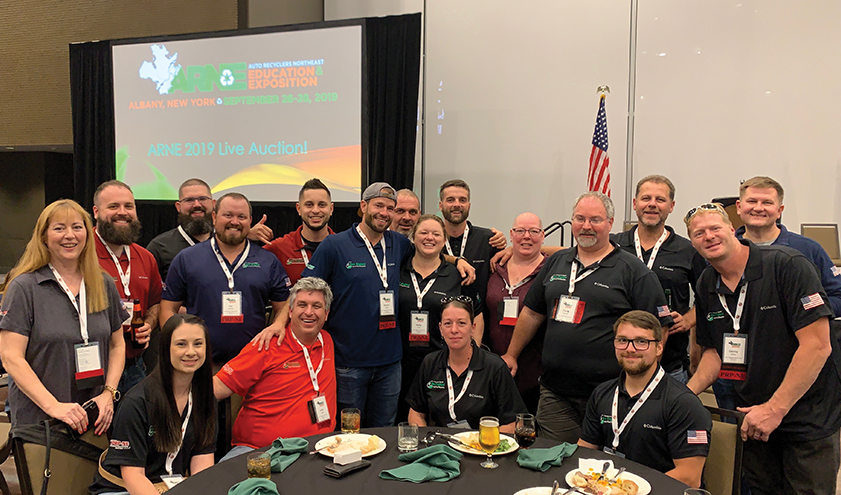
We communicated well. We had regular meetings with the whole company and within our teams and allowed the meetings to be flexible. We always had full company and department meetings every month.
Regardless of whether the decision was right or wrong, we never publicly brought up that it was ‘Holly’s decision or JC’s decision’ kind of scenario. We never undermined each other publicly or our managers. Now, privately, I’m not going to say we have never shut the door and discussed it.
We weren’t afraid to try something different and change a whole department and turn things around backwards and literally upside down. Sometimes that’s how really cool things happened.
Vince: What about the employee culture? How did you handle that?
Holly: JC was excellent at recognition for both big and little things. It doesn’t cost you anything, right? You can say good things to people all day long, and you always point to the good, not the bad.
JC: One of the things that we’re both proud of was what we called our “Iron Man.” Each department had one each week, like the best driver and the best dismantler. At the end of the year, we publicly praised them in front of their peers. That’s important, and it improved our company’s culture.
One day, a guy was wrapping up an engine, and I’m like, ‘That looks awesome.’ I grabbed him and called the whole department together to say, ‘This is what we do. Look at what Alan did. Alan is a talented professional. That looks awesome.’ For the rest of the day, he was like a superhero.
Public recognition really matters. When they go home, and their spouse says, ‘How was work today?’ and they share that experience with them, it reinforces that they matter.
Once we sold the company, our team told us that what they appreciated most was our praise for their work.
Employees appreciating fellow employees is critical, too. Your team needs to understand how important it is to do their job correctly and how it impacts others to do their job correctly.
Bonus compensation is important for a job well done. We had a very simple five-tier bonus plan for the whole company.
The first tier was for safety, and everyone was held accountable for it. If we had an accident, that safety bonus was taken away, regardless of the department you worked in. Safety was paramount to the business, and it gave employees assurance that everybody went home with all their fingers, toes, eyes, hands, and ears. Not only was it the right thing to do from a corporate perspective, it reinforced to everyone that we were all human.
Holly: Another unique thing in our culture was the process to hire new employees. When it was brought to our attention that we needed to hire someone, we evaluated if we really needed a new person. We would pull out our org chart in the conference room and hash out roles and responsibilities. We would move people around before hiring.
JC: Our theory was that with fewer people, the people we had could make more money. We found the highest caliber people we could hire, paid the highest wages that we could afford, and allowed them to expand and to grow within their range structure.
Vince: What led to the decision to sell NEATR?
JC: It was during COVID. We had some highly-engaged employees, and some who were not engaged at all. It was difficult to navigate the pandemic rules of our state.
The combination of those factors and the fair price we received from Fenix compelled us to take advantage of the opportunity. We are adventurous, so we sold the business.
When we started the company, we had 5 employees, and when we left, we had 70. We had 14 delivery trucks and were processing over 600 cars a month in full service. We were growing fast with a lot of irons in the fire. So, it was a very, very hard decision, but a good time to sell.
Vince: Then retirement?
JC: We took 90 days to travel and were now living in Florida. Together, we realized that retirement isn’t going to be as much fun as we thought it would be.
We work well together and had this goal. We had a purpose every day to push our company to be the best together with our people … and then you go to zero. Retirement was not as inspiring as we thought. We took the time to look at our lives to examine what we enjoy most about the journey of life and business. For us, we realized it we were not in this for the destination; it was always the journey we enjoyed.
We are two highly motivated people who enjoyed an extended period in corporate, non-corporate, and family business work, and all the things. Now, the resources are there, but we just didn’t have a hobby. Automotive recycling was our culture; this was our family. And suddenly we weren’t part of this, and it was sad.
We wanted to be back in this industry; it’s part of our lives, and we enjoy the people. I don’t think that’s going to change for us.
Vince: You begin now to look at new ventures; explain that process.
JC: We had the time, resources, and ability to work on other business ventures.
Along with that, we had always had a handful of people that we wanted to work with. We leaned into our strengths. We decided to determine how we could leverage our knowledge.
We came up with VIN Match PRO!
Holly: We also have other projects, like part-ownership in a self-service in Hudson, Florida.
JC: Yes, we have a partner, Doug Grose. He and I worked together 20 years ago, and we always said, ‘Someday we’re going to own a salvage yard together,’ and now here we are twenty years later.
Working with business partners, we are not so much focused on the day-to-day operations. They handle that and we provide the input for big-picture business and financial advice, as well as business strategy.
So, it is different now, yet still very rewarding to work in the industry we love with high-caliber people.