
By Carlos Barboza

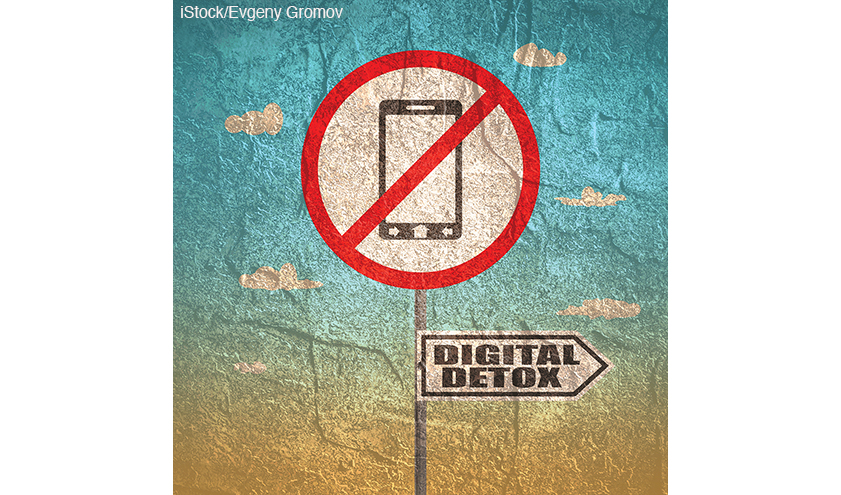
As Frank Abagnale, famed for Catch Me If You Can, warns: “The greatest threat to security is convenience.” Detoxing makes us less vulnerable.
For many business owners today, mornings begin not with purpose but with pings: WhatsApp messages, email alerts, news updates, and social media feeds. By the time leaders get to their offices, their focus is already fractured. In the recycling and automotive industry, where fast decisions and problem-solving are daily requirements, distraction is costly.
Digital tools promise efficiency, but often they become traps. According to a RescueTime study, people check their phones 58 times per day on average, and nearly half of those checks occur during work hours. Leaders often underestimate how much energy they waste in digital noise.
The Myth of Multitasking
Psychologists like John Sweller, known for his work on cognitive load, show that the human brain does not multitask; it task switches. Every time we move from email to a report, from a text to a meeting, our brain pays a tax. This tax is measured in seconds or minutes, but compounded over the day, it drains hours of deep focus.
Cal Newport, author of Deep Work, warns that the constant pull of shallow digital distractions prevents leaders from reaching the states of concentration necessary for innovation and strategy. In recycling yards and auto parts businesses, that lack of focus leads to missed opportunities, poor employee guidance, and reactive leadership.
So, why Leaders Resist a Detox? Many leaders secretly fear that if they disconnect, they’ll lose control. What if an urgent deal comes through? What if a crisis emerges? This fear is real, but it’s also exaggerated. In reality, most “urgent” notifications are noise disguised as importance. Julio Vincent Gambuto, in his manifesto Please Unsubscribe, Thanks, reminds us that our attention is the most valuable currency, and we’re giving it away for free.
Components of a Digital Detox
- Device-Free Mornings. Starting the day without screens gives leaders control over focus. Instead of reading emails at 6:00 a.m., spend the first 30–60 minutes on exercise, reading, or goal setting. This practice aligns with Hal Elrod’s Miracle Morning framework and primes leaders for success.
- Notification Management. Turn off non-essential alerts. Keep phone calls for emergencies, silence group chats during work hours, and batch email checks. Leaders can set clear rules for when and how they are available, training their teams to respect boundaries.
- Tech-Free Meetings. One powerful practice: no phones or laptops during
team meetings unless absolutely necessary. Research from Harvard shows that distraction-free meetings are shorter and more productive.
- Scheduled Digital Windows. Instead of reacting to every ping, leaders set fixed windows for communication: two or three times a day for email, one window for messages, and dedicated blocks for deep work.
Let’s do a salvage yard scenario, one auto parts business owner in Florida experimented with a digital detox policy: employees could check email only at 10 a.m. and 3 p.m. At first, resistance was high. But within weeks, meetings shortened, productivity increased, and the owner reported less stress. Customers didn’t notice the difference, but employees felt it immediately.
Epictetus, the Stoic philosopher, said: “No man is free who is not master of himself.” A digital detox is, at its core, self-mastery. In Dopamine Nation, Anna Lembke explains that constant digital stimulation rewires the brain’s reward system. Detoxing resets dopamine levels, restoring focus and motivation.
I’m pretty sure you’ve heard or said this: “I can’t afford to disconnect.” In truth, you can’t afford not to. Every hour of shallow distraction robs you of growth. This comment is famous too: “My employees expect me to respond instantly.” Clear communication solves this. If teams know you check emails twice daily, they adapt.
The Cybersecurity Angle
A digital detox isn’t just about productivity; it’s about protection. Having experienced a serious hack myself, I know how dangerous it is to live constantly connected without safeguards. Hackers prey on distraction: phishing emails, suspicious links, or fake invoices catch us when we are rushed.
By slowing down, creating intentional digital habits, and limiting exposure, leaders lower their risk of falling victim. As Frank Abagnale, famed for Catch Me If You Can, warns: “The greatest threat to security is convenience.” Detoxing makes us less vulnerable.
Practical Steps for Business Owners
- Set phone-free zones: bedroom, dining table, meetings.
- Create a digital Sabbath: one day or a half-day each week without devices.
- Use physical tools: paper journals, whiteboards, and face-to-face conversations.
- Invest in cyber hygiene: password managers, two-factor authentication, and staff training.
Get to It!
Now let’s practice. Here’s an experiment: The 30-Day Detox Challenge.
For one month, commit to:
• No screens the first hour after waking.
• Email only at scheduled times.
• At least one meeting per week is completely tech-free.
Track productivity, stress levels, and employee engagement. Most leaders discover that instead of losing control, they regain it. Are you willing to do it? Just try it, what would you lose?
Therefore, we live in the most connected age in history, yet many leaders feel more disconnected from their purpose than ever. A digital detox is not about rejecting technology; it’s about mastering it.
By reclaiming mornings, meetings, and mental focus from digital noise, leaders not only become more effective, but they set a cultural standard for their teams. True leadership is not about being always available; it’s about being present where it matters most. Blessings.

Carlos Barboza is the owner of Eco Green Auto Parts, Orlando, FL. Their website is https://ecogautoparts.com and they can be found on Facebook @ecogreenautoparts.


