By: Natasha Broxton

Most recyclers are not losing revenue because they are not working hard enough.
They are losing revenue because the same decision gets made differently depending on who is in the building that day.
One person answers the phone and gives a quote. Someone else answers and gives a different one. A customer calls about a part. One employee follows up. Another assumes someone else handled it. A vehicle comes in for purchase. The offer depends entirely on who walked out to look at it.
I know this because I lived it.
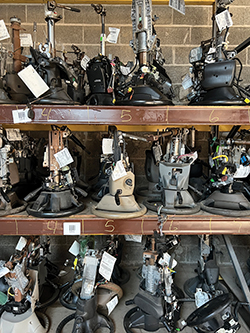
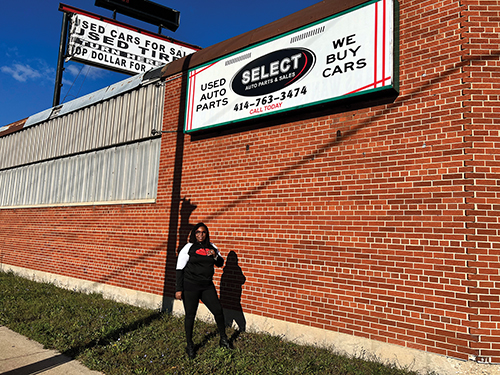
I operate a 125,000-square-foot indoor automotive recycling facility in Milwaukee, Wisconsin. Fourteen years in, the thing that threatened to slow us down was not competition or the economy. It was an inconsistency built on tribal knowledge.
When your business runs on what lives inside the heads of three or four key people, you are one resignation, retirement, or bad day away from a real problem.
That is why I started paying attention to AI. Not because I was looking for the newest technology. Not because I wanted to replace people. I wanted to build systems that made good decisions happen more consistently, regardless of who was in the building.
We began documenting processes, capturing decision-making logic, and creating systems that could support the team regardless of who was working that day. Onboarding became faster. Information became easier to find. Tasks that used to require my direct involvement no longer depend on my availability.
One of the biggest lessons I learned is that AI is most valuable when it supports the work people are already doing. It is not about replacing experience. It is about making that experience more accessible to the rest of the organization.
The recyclers reading this know exactly what I am describing.
You have watched a great employee leave and felt the gap they left behind. You have answered a customer call that should have been handled hours ago. You have corrected a pricing mistake that never should have happened. You have spent time solving problems that could have been prevented if the right information had been available at the right moment.
Those are not people problems.
They are systems problems.
Pricing. Follow-up. After-hours response. Onboarding. Every one of those is a systems problem.
AI gives us an opportunity to build better systems.
The automotive recycling industry has always adapted. We adopted inventory management systems. We embraced digital marketplaces. We learned how to compete in a more connected and data-driven environment. We continue to adapt as vehicles become more complex and customer expectations continue to rise.
AI is simply the next evolution of that process.
The operators who take it seriously today will not just become more efficient. They will become more resilient. Their businesses will be less dependent on memory, less dependent on any one employee, and better positioned to grow without losing consistency.
My advice is simple.
Don't start with AI.
Start with the places where money is leaking.
Start with the decisions that change depending on who is working. Start with the tasks that constantly require the owner's intervention. Start with the knowledge that only exists inside one person's head.
That is where AI belongs.
And that is why recyclers need to take it seriously.

Natasha Broxton is the Founder and CEO of Select Auto Parts & Sales, Milwaukee's only indoor automotive recycling facility, and Founder of Alitura Group, the only operator-led AI modernization firm focused specifically on automotive recycling. Every system she recommends has been built and proven inside her own 125,000-square-foot operation first. She helps recyclers identify where execution inconsistency is costing revenue and where AI can create operational leverage. Learn more at AlituraGroup.com/start.