And What That Level of Investment Could Do for the Auto Recycling Industry

By Mike Kunkel
Quality and dependable workers are out there waiting to be hired.
They are working with us, for us, and among us right now.
As someone working in and around operational assessments in this industry, you’ve likely seen firsthand how much performance varies location to location. That variation is rarely about parts availability.
It’s about process discipline.
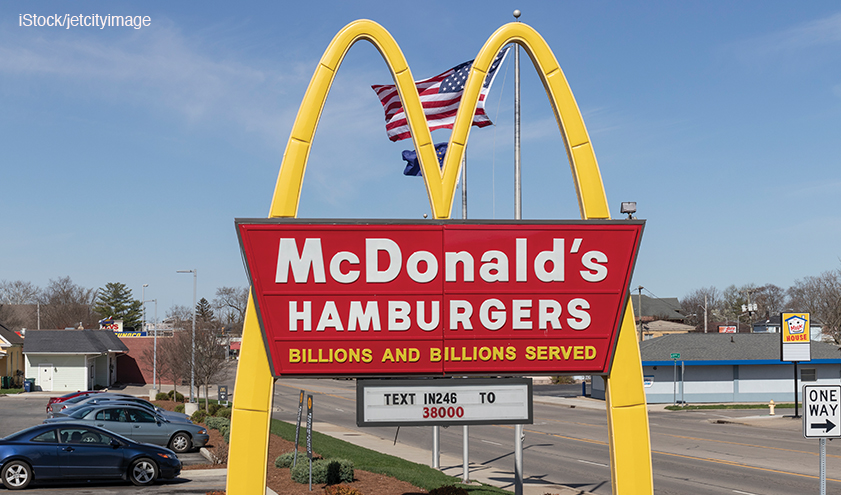
Few companies in the world are as operationally consistent as McDonald’s. Whether you walk into a store in Texas, Tokyo, or Toronto, the experience is remarkably similar. That consistency is not accidental — it is engineered through one of the most disciplined training systems in the world.
Estimates vary, but McDonald’s and its franchisees are widely believed to invest hundreds of millions of dollars annually in global training and development. When you break that down, the per-employee training investment is often estimated between $1,000 and $3,000 per employee per year, depending on role and geography. Corporate managers and franchise operators often receive significantly more through Hamburger University and advanced leadership programs.
Now compare that to the auto recycling industry.
Most salvage yards and recycled auto parts businesses spend a fraction of that amount — often limited to basic safety training, forklift certification, and some point-of-sale system onboarding. Salespeople frequently learn on the job. Inventory teams develop processes informally. Managers are promoted because they’ve “been here the longest.”
The question isn’t whether McDonald’s spends more. The question is: What would happen if auto recyclers invested even half that level of structured training per employee?
What McDonald’s Actually Buys with Training
McDonald’s training investment produces four major outcomes:
- Process Standardization
- Speed and Consistency
- Scalable Leadership
- Predictable Financial Performance
Every crew member knows exactly how to assemble a product, handle a customer complaint, upsell, manage waste, and follow safety procedures. Managers are trained not just in operations but also in financials, people development, and performance metrics.
Training is not a cost center at McDonald’s—it is an operating system.
The Auto Recycling Industry Today In many auto recycling businesses:
• Sales processes vary by employee.
• Pricing decisions are inconsistent.
• Inventory descriptions lack uniform standards.
• Customer service depends heavily
on personality.
• Follow-up discipline is uneven.
• Technology adoption is reactive rather than strategic.
This is not because recyclers lack intelligence or work ethic. It’s because the industry grew up operationally—not institutionally. Many businesses were built by strong entrepreneurs who learned through experience rather than formal systems.
But as the industry faces increasing pressure — online marketplaces, electronic procurement, consolidation, warranty expectations, and customer speed demands — informal knowledge becomes a competitive liability.
What Could $1,500 Per Employee Do
Let’s use a conservative benchmark: $1,500 per employee per year in structured training.
For a 40-person recycling operation, that’s a $60,000 annual investment.
To many operators, that sounds like a big number.
But here’s what it could realistically produce:
- Sales Performance Gains
Structured training in:
• Phone skills
• Objection handling
• Value-based selling (warranty, quality grading)
• Quote follow-up discipline
• Electronic procurement response speed
If each salesperson increases the closing rate by just 5% or the average ticket by $20, the training often pays for itself within months.
In used auto parts, where margins are real but inconsistent, small behavioral improvements compound quickly.
- Inventory Accuracy and Speed
Training yard and inventory teams on:
• Standardized grading systems
• Photo standards
• Accurate interchange documentation
• Dismantling quality control
Better inventory equals:
• Fewer returns
• Higher customer confidence
• Stronger online conversion
• Reduced friction between sales and operations
McDonald’s doesn’t let individual stores define their own burger assembly method. Why do recyclers allow each dismantler to define what “A-grade” means?
- Management Development
Most recyclers promote their best operator or salesperson to management.
Few train them to manage.
Structured leadership training could cover:
• Daily KPI review habits
• Coaching conversations
• Accountability systems
• Margin analysis
• Expense control
• Conflict management
McDonald’s invests heavily in the development of shift leaders and store managers because it understands that frontline leadership drives profitability.
In auto recycling, the difference between a disciplined manager and a reactive one can be hundreds of thousands of dollars annually.
- Cultural Shift Toward Professionalism
One of McDonald’s greatest strengths is clarity. Employees know:
• What good looks like
• What the standards are
• What advancement requires
In many salvage operations, expectations are based on tribal knowledge.
Investing in training sends a signal:
“This is a professional industry. We operate with standards.”
That cultural shift matters as the industry competes for younger talent who expect development pathways—not just a paycheck.
The Competitive Landscape Is Changing
Electronic procurement platforms are compressing response times.
Online marketplaces are increasing price transparency.
Consolidators are building standardized multi-location operations.
Insurance relationships demand documentation and consistency.
The industry is no longer competing yard to yard locally. It is competing nationally and digitally.
McDonald’s built its training infrastructure to support scale and consistency. Auto recyclers now face similar pressures—but many are trying to scale without institutional systems.
The Return on Training Is Not Just Financial
Training also reduces:
• Employee turnover
• Workplace accidents
• Customer complaints
• Internal conflict
Turnover alone is expensive. Recruiting, onboarding, and lost productivity easily exceed several thousand dollars per employee.
If better training reduces turnover by even 10–15%, it significantly offsets the upfront cost.
The Objection: “We Can’t Afford That”
The more accurate question may be:
Can we afford not to?
Consider:
• One misgraded engine return can cost $1,500–$3,000.
• One poorly handled insurance relationship can cost recurring business.
• One underperforming salesperson may represent $250,000+ in missed annual revenue.
Training is rarely the biggest line item on a P&L. But undertraining silently erodes every other line.
What Industry-Level Investment Could Look Like If the broader auto recycling industry embraced structured training, we could see:
• Standardized grading language across companies
• Shared sales training models
• Technology adoption training
• Leadership development programs
• Industry-recognized certifications beyond compliance
Imagine if every yard operated with the same clarity McDonald’s brings to fast food.
The industry’s public perception would improve.
Insurance carriers would have more confidence.
Customers would experience consistency.
Margins would stabilize.
A Mindset Shift
McDonald’s does not see training as optional.
It sees training as the foundation of brand value.
Auto recycling has historically been asset-heavy—land, equipment, and inventory.
But the future is capability-heavy—systems, speed, accuracy, and people development.
As someone working in and around operational assessments in this industry, you’ve likely seen firsthand how much performance varies location to location. That variation is rarely about parts availability. It’s about process discipline.
And discipline is taught.
Final Thought
McDonald’s sells hamburgers.
Auto recyclers sell complex mechanical assemblies with warranty implications and logistical challenges.
If a burger chain invests $1,000–$3,000 per employee annually in structured training, what does that say about an industry selling engines, transmissions, and ADAS-equipped components?
The opportunity isn’t to copy McDonald’s.
The opportunity is to recognize that world-class execution requires world-class training.
The companies that treat training as an operating system—not an expense—will define the next era of auto recycling.

Mike Kunkel is an automotive industry lifer having grown up in his family’s new auto supply, paint body & equipment and machine shop. Following his college graduation, he entered the salvage industry as an installer for Auto Info. His love of the industry led to a successful career in building a large recycling facility in Fort Worth, Texas while being instrumental in the formulation and growth of the Team PRP program. Mike is a frequent speaker at industry events in various countries. Mike uses a basic and proven platform to analyze businesses. He provides an honest assessment of where a facility is and what steps need to be taken to grow both sales and profits. Mike is a proven leader who is highly regarded in the automotive industry.