By Jer Banta

Some of the most important things we learned in EOS were how to create clarity and reinforce our goals with our teams.
Keeping our folks who do the work motivated to win for the greater good and health of the company is key to creating a great place to work and growing together.
As a leader or owner, do you find yourself making plans and setting goals that no one else in your business follows or cares about? I can relate. As a young, first-time general manager at Greenleaf Auto in the mid-2000s, I felt very confused and disappointed that my team wasn’t performing as I needed them to for “our” site to succeed. I had a boss who gave me my goals and “marching orders” for the month, the quarter, and the year, and I wanted to please and do a good job.
I was used to individual success as a former high-performing salesperson and sales manager. I thought I knew how to achieve high performance. Show up early, work harder than anyone else in the room, and take control of my own destiny. Well… as an employee responsible for their own little piece of the puzzle, that works just fine. As a leader of a facility with 50 employees, it's a different story.
Long story short, I struggled. My first gig as a general manager lasted only 3.5 years. I went back to sales, and it would be many years later before I realized and learned from my mistakes how to lead people and actually get the results I desired. It did not come from me getting “tougher” or getting better at “laying down the law.” That type of leadership always made me very uncomfortable. Here's the rest of the story.
In 2015, I found a new home with Bessler Auto Parts in Wilder, KY. My role was to build a new marketplace and facility in Northeast Ohio. Here was my chance to lead and manage people and a facility, starting from the ground up.
I was excited about the opportunity, and the Bessler family and I had an instant connection and a growth mindset. We started the journey with a small warehouse, a delivery driver, and me.

I worked very hard just as I had in the old days when I was a salesperson. We were having success, and within 1.5 years, I had hired 4 salespeople and 4 delivery drivers, quickly outgrowing our little hub. We decided to buy a full-fledged facility. It just so happened to be the same facility where I started my career (Greenleaf, OH). I was now building a dismantling crew, shipping staff, parts pullers, etc.
I started to feel the old pressure of, “Holy crap, how do I keep all these people motivated and getting the job done? HOW DO I NOT FAIL AGAIN?”
Fortunately for me, the leader I now worked for, John Bessler, was a forward-thinking coach and mentor. He also invested in his leadership team by sending us to culture and communication classes, private leadership coaching, and Vistage business meetings. John embraced EOS (Entrepreneurial Operating System). This gave us a roadmap and a structure to unify and motivate our teams across the business.
Some of the most important things we learned in EOS were how to create clarity and reinforce our goals with our teams. Two of the methods we used were departmental scorecards and daily huddles.
Scorecards. What gets measured improves.
Not only do scorecards measure important KPIs and focus on the things that matter, but they also give our employees clarity on whether we are winning or losing. Keeping our folks who do the work motivated to win for the greater good and health of the company is key to creating a great place to work and growing together.
Scorecards help us justify raises, bonuses, and scaling up (or down sometimes). I will say that the most important scorecard is NOT made up of numbers. It’s a public, well-communicated set of core values and a business purpose that everyone knows and is held accountable to. If you can establish this part of the culture first, all other scorecards are relatable to the “cause.”
When creating scorecards, it’s important to find the KPI’s that really drive results for the team you are leading. Avoid measuring things just to measure things. Keep the scorecard easy to understand and concise to convey your goals. Most importantly, UPDATE your scorecard frequently and share it with the team often to keep the focus high. Even if it feels redundant. People like to win, and if we are not winning, we need to know early so we can course correct NOW instead of waiting for the results at the end of the month and wondering why we did not achieve our goals. Create the goals, share the data, and most importantly, involve your team in creating solutions if you are not on track to hit the goal.
How do we find time to keep our teams on the same page?
One word, Huddles.
These are mini-meetings, 5-10 minutes in length, to update and convey important messages and areas of focus on a daily basis.
Daily huddles became the way I kept my team focused on the most important tasks. Not only for scorecard items but also for culture or core value reminders. On 4 out of 5 days during the week, from 7:50 to 8:00AM, I had a daily huddle with my sales staff. The 5th day was the 1-hour sales meeting. We used Microsoft Teams to bring everyone together. My team could log in from their phones or computers, no matter where they were.
Obviously, your various production folks are likely to be working in the same area, and you can do it live if you prefer. I would spend 5 minutes on the team numbers, highlighting the wins.
I would also address any areas we needed to improve. I would use the time as well for minor procedural reminders on things that may be slipping a bit (RMA creations, proper Credit card procedures, quote call backs, order follow-ups, the list goes on …).
I also enjoyed finding short topics that reinforced our culture and core values through a story or event that was current and relevant. All in all, huddles kept my team on the same page and often spurred more in-depth communication afterward with individuals on how they could improve their own performance to help the team.
The moral of the story is that we need to give people clarity about expectations, and we must convey these messages frequently so that there is no doubt about where we are going, why we do it, and whether we are winning or losing. Scorecards and Huddles drive consistency and a high level of awareness within our business, making your job as the leader easier in the long run.
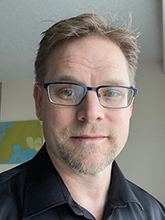
Jer Banta is a seasoned auto parts industry leader with over three decades of experience, having progressed from an entry-level delivery driver to senior leadership and consulting roles. His career spans privately held companies and consolidators, with notable achievements including building and scaling a dismantling facility in Northeast Ohio and helping position a company for acquisition. Currently with PTC, Jer leverages deep operational expertise, KPI-driven insight, and a strong passion for people and culture to help recyclers improve performance and develop high-performing teams across North America and beyond.