
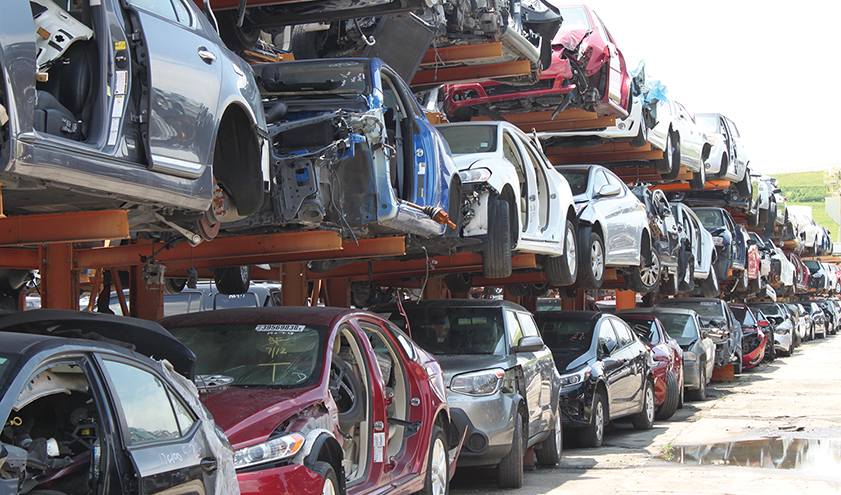
The idea of cleaning up the yard is a definite recurring burden we all face. But we know a yard’s layout and the strength of its strategy can go hand in hand with how well we clean it and maintain it.
The year 2025 has brought forth many challenges we had expected and plenty we had not. Many profits were met with matching pitfalls. Always busy and seemingly never ahead, but continuing to move forward to make it happen. Per usual, auto recyclers at large have persevered. But many, if not most, have done so at the cost of something else.

Have we put off projects of tomorrow while prioritizing the possible proliferating profits of today? Or have we favored fulfilling orders over the orderly need of organization? Whatever the year has held for you, as it closes out, now is the time to reflect in anticipation of our next chapter. It is time to clean the yard and get ourselves and the yard organized once again.
Tackling Pain Points
For those who continue to lead the way for responsible recyclers, how do you do it? How can we manage time and projects well enough to ensure we are not compromising our operations and policies in exchange for meeting sales & inventory targets? Do we slow down, putting operations over orders? Or do we make additional time or take on additional help, if that is available, to help us avoid falling behind in any of these processes?
However you choose to do it, perhaps the best method to combat these pain points is to expect and plan for their impact. By making cleaning, purging, restructuring, and organizing the yard a cornerstone and consistent part of our daily routines, we can help eliminate the pileup. We can transition from playing catch-up and dealing with backlogs of housekeeping projects to creating a new game plan that positions us for organized, profitable success.
Organization for Optimization
So what does this type of clean-up involve, and how does yard organization help optimize our processes? That loaded question can be countered by defining what type of yard you have. What is the layout of your auto recycling operation? Are you a self-service or full-service yard? And are your vehicles dismantled, used for rotating storage, or do you have more parts and buildings than you have actual vehicles? Understanding how you operate will give you further insight into your own operation’s choke points and challenges. If we combine this with the roots of why clutter, damage, dishevelment, or disorganization come into existence, it can help pinpoint the resources and recourse needed to aid our problem-solving methods.
So, given your dynamic and the logistical challenges you face, what does yard cleaning mean to you? And why must yard organization be prioritized to improve the effectiveness and efficiency of your operations’ flow?
The idea of cleaning up the yard is a definite recurring burden we all face. But we know a yard’s layout and the strength of its strategy can go hand in hand with how well we clean it and maintain it. If we do not implement a program to keep our setting and storage clean and organized, we begin to allow overcrowding, damage, and inaccurate inventory. These consequences we have all seen and may have suffered. Usually, this results in unsafe, littered conditions, which are always unacceptable for a multitude of reasons. Safety must always come first, and whether you run a U Pull It or your staff pulls all the parts, we cannot risk anyone getting hurt. That means proper and compliant storage.
So, how we store our vehicles and parts, down to how we keep these storage areas clean, organized, and safe, will always serve the ultimate purpose of keeping everyone safe.
Balancing Act
How vehicles are being stored at each facility is a dynamic that must be analyzed to see what works best for each of us. Finding that balance between optimizing space, guaranteeing inventory control, and ensuring efficient operational flow is quintessential.
We can not have our team spending all day trying to find a car or handling any vehicle more than absolutely necessary. The same goes for the parts on our shelves and racks. Vehicle Storage layout, organization, and accessibility can be determined by several factors. Such things that dictate the latter include the length of the forks on our loaders.
Are we picking vehicles up from the side or the long way? The other constraint is the total available space for vehicle storage and how much of that is allotted to each vehicle section. What does the terrain look like, and does the topography of the yard play a role in where and how we set our vehicles up? Think in terms of runoff, such as where water pools. How much space does each section have, and are there rutted or rugged roadways that are traversed? Does it make sense to keep bigger or smaller vehicles closer or farther from our buildings or perimeters? And then there is the million-dollar question of EVs and Hybrids. How and where do we store them, especially when they are new arrivals awaiting depollution and deactivation? Store your vehicles safely and wisely.
Optimizing Space in #1
The bottom line is we need all the space we can get, and how we utilize and optimize it has the biggest impact on our ability to operate efficiently and effectively. Optimizing this space is integral to how we facilitate the flow of our operations. These factors determine whether we have high or low workload rows of vehicles. Limited space tends to lead to higher inventory damage, overcrowding, and high workloads (Moving multiple vehicles to reach the one you need). More space gives us a better opportunity to work and to remain clean and organized. So start figuring out how to create more space and continue rotating vehicles in and around it. Whether it is adjusting the timeline of your vehicles throughout their life cycle at your facility, or going so far as to create additional actual space. This could look like anything from rearranging and restructuring, to rezoning or adding additional land space for vehicle and part storage.
So when looking into organizing our yards, we should all have at least a general idea of what the flow chart and numbers look like for the life cycle of vehicles moving through our facility. This includes knowing and understanding the numbers and variables behind the following: how many vehicles do we buy a month, how many do we process/dismantle/put into storage, how long do they stay in storage/inventory and how often and how many vehicles do we crush, and when do we send them out. Understanding the life cycle of your vehicles and the flow chart that maps these logistics can help you with yard organization and planning for the inevitable cogs in this wheel. Log jams, disorder, and inefficiencies create these chokepoints within the flow. Unexpected increases in purchased vehicles, inventory backlogs, and the crush car market downswings are the more frequent variables that become limitations on help and resources.
Storage Factors Into Quality
Once we have determined our real-time available space given our limitations, how can we then optimize the organization of this presumed grid? Are we setting up cars by an inventory number section, or are we grouping them by make and model? Do they have wheels on them, or are they welding wheels or cutting railroad ties? The types of vehicles you are storing, and their condition, may also factor into how we set up our vehicles and how we navigate the flow of vehicles throughout the storage area. If we are not strategizing the most optimal output given this data, we will continuously run into future problems that will compromise inventory control, sales numbers, and environmental compliance.
Our commitment to “no surprises upon delivery” is a credo that must definitively define our dismantling. Once our parts are inventoried, it is paramount that we keep them in the same conditions in which they were inventoried. Having a transparent, highly accurate inventory, teamed with correct ARA Damage Codes, quality descriptions, and pictures, is the major driver of our sales. If improper spacing or storage is causing continuous damage to the vehicles and surrounding vehicles, or if we are amassing yard damage from our forks, then we are just throwing money away and wasting time.
Do not let laziness or lack of foresight continue to damage your goods. This is why accountability matters. And why vehicle spacing, storage, and the cleanliness of each vehicle’s area is something that may seem underrated, but is an absolute necessity.
Controlling the Controllables
Control and efficiency are what move us forward. The way to maintain this is to be proactive in problem-solving the yard issues that arise within our operations. So if we are talking money, think of all the money that could potentially be lying on the ground or being thrown away. Think of the money saved with proper yard organization, and think of the found money from keeping it clean. Where do you want to see your money go and make it happen!
The parts that tend to pile between vehicles all have value. Reuse and recycle people! This is huge for accurate inventory reporting. Making sure parts from jobs or people are not finding their way onto the ground or in a direction that could lead to damage, or worse, MIA. However, we all know this has always been an issue with anything less than a complete dismantling of the vehicle. The way to capitalize on this recurring problem is to spearhead it.
Put protocols and people in a place to deal with it. That means dismantling further and thinking ahead. Start by taking off straggling viable and junk parts and putting them on the shelf or finding a core or scrap outlet for them. The parts that fall off or get thrown to the wayside need to be picked up. This cleaning and picking up should be part of our monthly, if not daily, processes. Whether we reallocate help or hire more, or empower our team to work together to make this possible, it is a must. We must make sure we are picking up the parts, junk, and debris. Not only are we ensuring our people’s safety, but also the safety of our vehicles and parts.
Sorting and Evaluating
With this act, we can sort through this free and found money and recycle the rest. Curtailing the volume of this happening through protocol gives us the opportunity to access an untapped revenue stream that can strengthen our most viable and profitable ones. Parts, metal, junk, or debris. Scrap it, core it, or see if it meets the acceptable weight for our crush cars. All of the clutter and debris that becomes scattered or littered about our operations has value. It is time to capitalize on this conundrum.
The need to stay clean and organized is imperative moving forward. From our operations to each yard’s brand and on to strengthening the image and reputation of the industry at large. Making time to clean up and catch up is not only about safety and inventory control, but it is also about doing our part to remain environmentally conscious and compliant.
Stand Out as Stellar
For those out there not ARA Certified Auto Recyclers (CAR), I would think now would be an excellent time to review this advantageous accolade. This certification contains a key part of the protocol to help you stay clean and organized. This audit and accountability of your operations are not only manageable and achievable, but their regulation can also promote and motivate your business to reach the next level. Not only are we creating cleaner, better-organized operational flows, but we are doing so with a bigger, greener picture in mind.
As we review the merit and the math behind cleaning and organizing the yard, we are forced to ask ourselves the how and why. The why seems to be simple. The debris on the ground is money. Pick up the money and cash it in. Turn this problem into an all-encompassing, profitable solution. One that not only cleans the roadways and rows, but also strengthens our organization, inventory control, and operational flow. How this cleaning up and organization, and maybe even your reorganization, looks depends on how you operate. Aerial views of other auto recyclers’ facilities are just as useful as reaching out to an ARA Mentor or connecting with another ARA member to bounce ideas around.
There is no one-size-fits-all solution for the problems that drive the need for cleanliness and organization. But these potentially profitable and prospective principles, when examined and implemented, can be the catalysts that inspire reason to make more green while keeping it clean.
As auto recyclers know better than most, “Stay committed to your decisions, but stay flexible in your approach,” says motivational guru Tony Robbins.

Brian Bachand is a second generation auto recycler, who helps own and operate Westover Auto Salvage in Belchertown, MA. He is on the Board of Directors for the Auto Recyclers Association of MA and a proud ARA Member. Brian has a Bachelor’s Degree in Accounting and paired with almost 25 years of auto recycling experience, will continue to implement ARA Advocacy for being a leader in the auto industry.


