by Brian Bachand, Sandy Blalock, Hal Hoke—WolfPack Enterprises, and Bret Buike—National Reinsurance

Progress is impossible without change, and those who cannot change their minds cannot change anything.
—George Bernard Shaw
Auto Recyclers Gaining Ground on Capitol Hill
by Brian Bachand
You are a professional automotive recycler representing the ARA and the interests of your fellow recyclers, advocating for changes that impact the industry in real time.
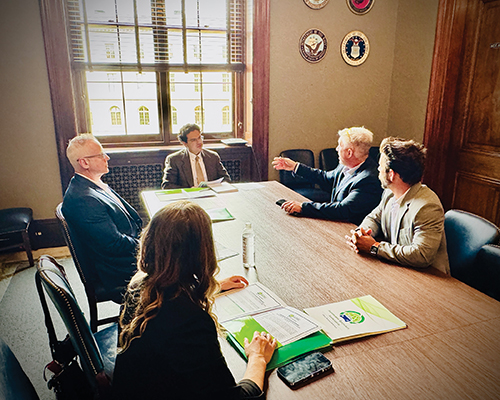
Imagine entering your United States Senator’s or House Representative’s office knowing very well that your advocacy agenda does not align with their political party, personal values, or even the least of their priorities. You are dressed for success, yet you understand that they might be merely fulfilling their obligation as your representative to hear your concerns.
How do we create productive meetings regardless of the factors and continue to progress toward the change we aim to see?
How do we educate and re-educate legislators and others that we are industry experts in vehicle dismantling and a necessary part of the automotive supply chain?
How do we take our place as integral and sustainable facilitators of the forward-thinking, eco-conscious circular economic model?
Fortunately for those of us who attend Hill Days each year, we are given the answers before we face this test at our meetings on Capitol Hill. It is a dedicated time when auto recyclers and vested parties from across the nation meet in our nation’s capital to discuss and brainstorm the immediate challenges, as well as pending and proposed legislation, impacting our industry.
Representing a Wide Swath
This year’s Hill Days were an advocacy adventure full of unforeseen circumstances and unexpected pleasantries. We had an excellent turnout, including associate members and leaders from several state associations and other industry organizations, as well as new faces joining the effort. It was great to see the attendees eager and invested in this year’s legislative agenda.
To be specific, it was incredible to see Hal Hoke of Wolfpack Industries and Bret Buike from National Reinsurance as the event sponsors, as well as representatives from URG, Hub Industrial, Automotive Recyclers of Michigan, and the state affiliate groups led by Sandy Blalock (NY,VA, PA, MN, NM, AZ, UT, IN, AL, and the Western Auto Recyclers Alliance), and other supportive companies and members. Attendance exceeded last year's numbers, and the evolving diversity of the members has strengthened our resolve to get the job at hand done.
As the Hill Day preparation meeting opened at the trendy ‘Yours Truly DC (an IHG hotel), things seemed on the up and up. Well, spirits were up, the temperature outside was up, gas prices were up, copper was up, and our fearless executive director, Vince Edivan, was up … on the podium. He deserves special recognition for handling all the unforeseen agenda changes that required the skills of a ‘sumo wrestler’ during our time in DC. (If you attended the 2025 ARA Annual Convention, you might get the reference! Vince’s wrestling debut in a sumo costume, along with the sumo match with Jessica Andrews, ARA, and Amberay Novak, HUB Industrial, were favorite highlights mentioned by Hill Day attendees that provided a good 30 minutes of laughs and the needed event icebreaker to kick us off.)
Getting Down to Business
Each year, the ARA staff prepares for this event to ensure everything flows smoothly. This year in particular, Jessica, Kelly Badillo, and Tiffany Jackson ran a tight ship and worked extremely hard to coordinate and facilitate everything that makes this such a meaningful, enjoyable, and impactful time. The prepared legislative packets included directions to the House and Senate buildings, scheduling information, and many other things; ARA thinks of everything.
However, no one in attendance foresaw that we would be holding the kick-off meeting without our two invaluable MVP-level leaders.
Emil Nusbaum, ARA’s Vice President of Government Affairs, and his wife had just been blessed with a beautiful baby boy born just a few days prior to Hill Days. A big congrats to both of them on such wonderful news!
Government Affairs Committee Chairman Slater Shroyer had his flight canceled the night before the event, delaying his arrival at the debriefing. (And, to make matters worse, they lost his luggage.)
Yet after the morning introductions, everyone was ready to go, and Vince did a phenomenal job of diving into the general directives while we waited for Slater's arrival from the airport. Four major asks were on the docket. He led the group in discussing what to expect, what to do, and what not to do or say, complemented by veteran attendee input throughout the conversations. Excellent pro tips were given by ARA President Shannon Nordstrom, Amber Kendrick, and others who have attended the event before. At the same time, those new to Hill Days appreciated the input about what to expect from the proverbial gauntlet of meetings.
Strategies were given for making what we were saying relatable and comprehensible, especially to simplify so that everyone at the table could understand (i.e., without the recycler vernacular). The sharing of experiences and the shedding of light on how to tailor what we were there to do proved invaluable to the training. The use of these techniques or strategies was aimed at maximizing our impact across party lines, and for many, it was the key to success.
Finally, Slater arrived to thunderous applause, and he wasted no time getting started on the heavy lifting by giving us the “cheat sheet” on the inner workings of the language in these bills and the issues we would address. As an oracle of knowledge on the topics we were to discuss, Slater found ways to put things in terms that made the points sink in and could be easily brought up and elaborated on.
Emil, Slater, the Government Affairs Committee (GC), and the ARA Executive Committee all worked very hard in preparation for these meetings, and it showed. The simplified but professionally fine-tuned questions and the supporting information we were to provide to our state representatives were ingeniously crafted.
The Asks
The big ask this year was for help to include automotive recyclers on the Fair Competition After Vehicles are Sold Advisory Committee – REPAIR Act (S. 1379/H.R. 1566). Current committee membership includes 11 sector seats ranging from aftermarket parts, OEMs, diagnostic tool manufacturers, consumer rights groups, insurers, and trucking companies.
Auto recyclers were the only supply chain stakeholder group left off this list, yet in the actual bill, we were included as ‘impacted parties.’ And to add to that injustice, auto recyclers make up potentially more than 20% of the market for parts in collision and mechanical repairs. We need to be part of the group that decides how the Right to Repair will be regulated.
Other requests from legislators included Catalytic Converter Theft – Support the PART Act (S. 2238/H.R. 5221), and help to revise U.S. Environmental Protection Agency’s (EPA) interim enforcement policy entitled “Sale and Use of Aftermarket Catalytic Converters” (1986 Enforcement Policy) because Vehicle Owners Need a Modernized Catalytic Converter Reuse Policy that Reflects Today’s Technologies. What made these asks different from previous years was the effort put into their construction and the strategy behind crafting them. We were learning from experiences of years past and evolving with changing issues, capitalizing on immediate challenges we faced (such as the Right to Repair Advisory Board exclusion). ARA’s team found ways to drive the narrative to promote our agenda while aligning with the politics of those we were meeting.
The language and positions we proposed were reasonable, amicable, and achievable. In years past, we had asked for support on bills that were sometimes non-bipartisan or faced stronger adversaries and/or deeper pockets. Through this experience, we saw where we had gained traction and where issues sat idling. Shifting our paradigm changed the course of action, leading to continued progress in these meetings.
After lunch, allowing time for Slater to catch his breath, we had a very detailed and interesting presentation from Mark Bacchus and Tina Singh of Toyota of North America (TNA). From TNA’s really great work on automotive sustainability, we could see some of the results on display during the debriefing session after our visits on the Hill, which gave us a better understanding of the work.
The sustainability significance of the automotive recycling industry is increasingly recognized by legislators and other stakeholders who influence our industry. Toyota of North America's presentation cemented this by calling for the implementation of ARA’s Battery Hierarchy. This division of Toyota realizes that EV batteries are a significant concern. The introduction of more EPR programs has led Toyota to change its perception of these vehicles and batteries when they reach the point of repair or compromise.
Recyclers and manufacturers are seeing eye to eye and agreeing on a path forward. This news may have been the most unexpected to occur during Hill Days.
This revelation was very important, especially with Toyota looking to roll out a pilot program that could strengthen relations, alleviate liabilities, and close the loop on keeping parts and profits in the United States. This was a major positive that not only served as a strong motivator but also as a supporting talking point in the meetings the next day.
Fun Times
All work and no play makes me a dull boy. This was not the case following our day’s debriefing. ARA hosted the annual group picture in front of the Capitol Building, taken by photographer extraordinaire, Automotive Recycling Magazine’s own editor, Caryn Smith.
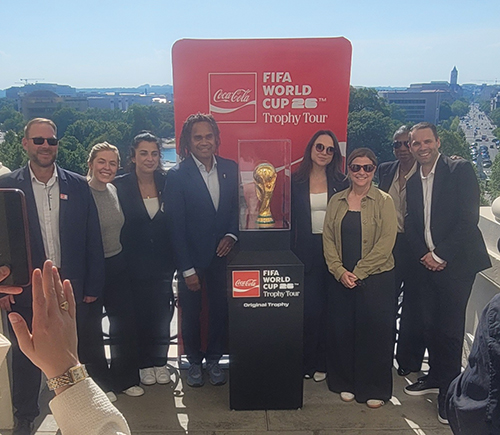
Loads of laughs and awesome pictures later, we made our way to DC’s F1 Arcade. This restaurant, bar, and entertainment spot was a hoot of a time. If you are ever in the area and have kids, I would definitely recommend checking it out. Fun for everyone, except on nights when Lance Thomas, from BYOT Auto Parts, is there racing. Then you are most likely to lose, for he won most of the races on our night out. After a great evening of networking and team fun, everyone retired for the night, ready and eager to take on the next day of meetings.
Breaking Down the Day
I can only speak to my experience with meetings with our Massachusetts representatives. Due to everyone’s mixed, scattered, and conflicting schedules and departures, we held the final debriefing session with only some of the attendees. However, from what I gathered from those recyclers, the major theme was Recycler Recognition. Auto recycling has become visible, not just an optic. Legislators and their staffers are beginning to realize the impact and importance of what we do.
ARA Vice President Tom Andrade, Everett's Auto Parts in Brockton, MA, and I made the absolute most of our meetings and came out with very productive conversations. We kept our thoughts on certain industry actors and topics in check and found ways for those we conversed with to relate to and empathize with our plight. All we had to do was figure out, based on who we met with and their party or ideological affiliation, and then find common ground.
Our training and prior experiences have conditioned us to read the room and to clearly communicate our asks, ensuring those in attendance understand the why and how. The offices we spoke to pledged support for our major ask of advocating for our representation on the Right to Repair Advisory Group. These constituents were also highly engaged in discussing the challenges and logistics of the correlation between specific pieces of legislation and their impact on auto recycling (EPR, Parts, and Right-to-Repair Acts).
A bonus endeavor was made by the office of Representative Stephen F. Lynch (D-MA) to attend Everett’s Auto Parts Anniversary this summer.
In conclusion, auto recycling is being taken seriously, and our image continues to improve. In recent years, we spent a lot of our meeting time educating and re-educating about our role and our commitment to break the junkyard stigma. Now, when an auto recycler walks into these meetings, we are more likely to be met with intrigue instead of ignorance.
We, as an industry, are making persistent progress, and that progress is resulting in change. We have changed how we operate, how we think, and how we plan for our future trajectory. Hill Days continues to be an enjoyable event and an advantageous act of advocacy. The number of attendees each year continues to grow, as does our reputation within government affairs. Meetings are becoming more productive and impactful, as are the results and resources from this event.
ARA continues to lead the way as an agent of change and will continue to do so, as George Bernard Shaw said, “Don’t wait for the right opportunity; create it.”
Showing Up for Our Industry: Why ARA Hill Days Still Matter
By Sandy Blalock
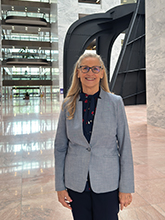
For many years, I have made the trip to Washington, D.C., for ARA Hill Days, and every year I am reminded why it matters. It is one thing to talk about the issues facing professional automotive recyclers among ourselves. It is another to sit across the table from members of Congress and their staff and explain, in real terms, how federal policy decisions affect our businesses, our employees, our customers, and the communities we serve.
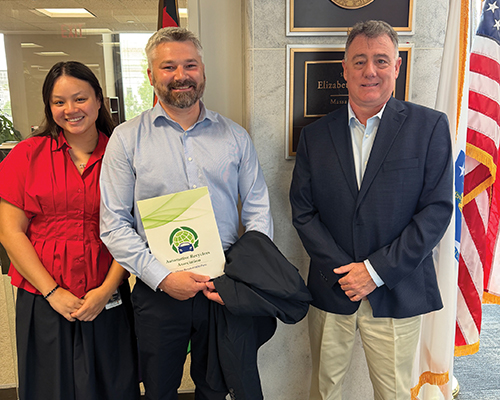
This year’s Hill Days were another important opportunity to put the professional automotive recycling industry directly in front of federal legislators and key staff. I was honored to meet with Senator Amy Klobuchar of Minnesota, Senator Tina Smith of Minnesota and Ben Ellgen from her office, Jackson Thein in Representative Melanie Stansbury’s New Mexico office, Alexandra Parker in Senator Mark Kelly’s Arizona office, Wes King in Senator Martin Heinrich’s New Mexico office, Carmen Scurato and Shelby Boxenbaum in Senator Ben Ray Luján’s New Mexico office, and Samara Klotz in Senator Ruben Gallego’s Arizona office.
Each meeting was different, but the message was consistent: professional automotive recyclers are a vital part of the automotive supply chain, the repair economy, and the circular economy. We are not simply dismantling vehicles. We are providing affordable recycled original equipment parts, supporting consumers and repairers, recovering valuable materials, keeping end-of-life vehicles out of landfills, and helping manage increasingly complex vehicle technologies.
One of the most important issues we discussed was the need for our industry to be included in federal conversations around repair access and competition. The REPAIR Act includes a Fair Competition After Vehicles Are Sold Advisory Committee, but as currently structured, the automotive recycling industry does not have a seat at that table. That is a serious gap. Recyclers are a primary source of recycled OEM replacement parts, and any discussion about repair competition, parts access, data access, and consumer choice is incomplete without our industry represented.
We also discussed catalytic converter theft and the importance of supporting policies that target criminals without creating unnecessary burdens for legitimate businesses.
Professional auto recyclers are often victims of converter theft ourselves. Our facilities are targeted, our employees can be put at risk, and we often purchase vehicles expecting the converters to still be attached, only to find they have been stolen before the vehicle reaches us. That is why federal consistency and enforcement matter.
At the same time, we discussed the need for a modernized policy on the reuse of catalytic converters. The current EPA policy is decades old and does not reflect today's technology.
With modern onboard diagnostics, emissions testing, and inspection capabilities, there should be a reasonable, performance-based pathway for the reuse of properly tested used OEM catalytic converters. This issue is about affordability, environmental responsibility, and common sense.
Another major topic was the handling of batteries for electric and hybrid vehicle propulsion. As more of these vehicles reach the end of their road life, professional automotive recyclers will be among the first to handle these batteries. Policymakers need to understand that reality. Any future battery policy must recognize the recycler’s role and avoid creating unfunded mandates or unrealistic responsibilities for the businesses already doing the work at the front end of the end-of-life vehicle process.
For me, Hill Days is not just about policy. It is about relationships. It is about helping legislators and staff understand who we are before a problem arises or a bill is drafted without our input. It is about making sure they see professional auto recyclers as responsible business owners, employers, environmental stewards, and an essential part of keeping vehicles and critical materials moving through the domestic supply chain.
I have participated in Hill Days for many years, and I can say without hesitation that these visits make a difference. Not every meeting results in an immediate commitment, and not every issue is solved in one conversation. But every meeting builds awareness. Every visit creates a connection. Every recycler who shows up helps strengthen the industry’s voice.
I also believe it is important for more recyclers to participate. No one tells our story better than the people who live it every day. Legislators need to hear directly from the businesses in their states and districts. They need to understand what it means to process end-of-life vehicles responsibly, to provide affordable parts to consumers, to comply with environmental and safety requirements, and to invest in training as vehicles become more complex.
Our industry has a strong story to tell, but we have to be willing to tell it. ARA Hill Days gives us that opportunity at the federal level. It gives us a chance to be proactive instead of reactive. It gives us a seat in the conversation before decisions are made that could impact our future.
I am grateful for the time these offices gave us and for the opportunity to once again advocate for the professional automotive recycling industry. I encourage every recycler who cares about the future of this industry to consider participating in Hill Days. Your voice matters. Your experience matters. And when we show up together, our industry is stronger.
Purpose and Pride
By Hal Hoke, WolfPack Enterprises
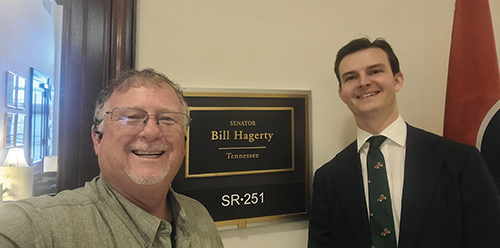
ARA Hill Days was a profoundly inspiring experience that instilled in me a deep sense of purpose and gratitude for being part of the Automotive Recyclers Association.
The collective passion for promoting freedom of choice for the American people was as solid as a 24-inch concrete slab for dismantling, serving as a powerful reminder of what can be achieved through unity and determination.
Walking the halls of Congress, engaging in meaningful discussions with my Congressman Scott DesJarlais, and the honor of sitting in the House Chamber left me with a profound sense of pride and hope for the future of our great nation.
Showing Up Where It Matters: A Firsthand Look at ARA Hill Days
by Bret Buike, National Reinsurance
There is something genuinely powerful about watching an entire industry put on its best shoes, walk the halls of Congress, and speak with one voice. That is exactly what happens every year at the Automotive Recyclers Association Hill Days—and if you have never participated, it is an experience worth making time for.
This was my second year attending Hill Days representing National Reinsurance, and if anything, the experience reinforced why we keep showing up. Supporting the ARA and the broader auto recycling industry is not just something we talk about—it is something we are committed to putting into action, and Hill Days is one of the most direct ways to do exactly that.
Hill Days brings together auto recyclers from across the country to Washington, D.C., to meet directly with members of the House and Senate and their staff. The goal is straightforward: make sure the people writing and voting on legislation that affects our industry actually understand what we do, what we need, and what is at stake for the businesses and communities we represent.
“Supporting the ARA and the broader auto recycling industry is not just something we talk about—it is something we are committed to putting into action.”
What impresses me most is the caliber of the people who show up. The yards that participate in Hill Days are not just the biggest or the loudest — they are the most engaged. These are owners and operators who care deeply enough about the future of this industry to take time away from their businesses, travel to the capital, and sit down with elected officials to have substantive conversations. That kind of commitment deserves recognition, and it does not go unnoticed on Capitol Hill.
It was also great to see the URG team represented at Hill Days this year. Their presence alongside the ARA speaks volumes. When two major organizations in this space show up together for the same cause, it sends a clear message to legislators that this industry is unified and serious. That kind of collaboration is what real advocacy looks like, and it is something both organizations should be proud of. At National Reinsurance, we are proud to be a part of it.
A major reason those conversations go so well is the preparation that the ARA team puts in behind the scenes. Vince Edivan, Emil Nusbaum, and Slater Shroyer deserve particular credit here. Slater especially did an outstanding job, filling in for Emil (who was with his wife, who was having their first baby), of getting attendees ready before we ever walked through a congressional office door. He breaks down the issues clearly, explains the legislative context, and coaches everyone on how to deliver the message in a way that is concise, credible, and compelling. By the time you sit down across from a senator or a representative, you are not guessing — you know exactly what you are there to talk about and why it matters.
That preparation, combined with the leadership of this year's ARA President, Shannon Nordstrom, makes all the difference. Legislators and their staff are busy. They appreciate advocates who come in informed, stay on point, and treat their time with respect. The ARA team ensures every attendee can do exactly that, whether it is their first Hill Days or their tenth.
For anyone in the automotive recycling industry who has not yet participated,
I would strongly encourage you to consider it. This is how policy gets shaped. Not just
by lobbyists and trade organizations working in the background, but by real business owners who can look a lawmaker in the eye and say: Here is what this means for my yard, my employees, and my customers back home. That authenticity matters, and the ARA gives us the platform and the tools to use it well.
The industry is well-served by the people who show up for Hill Days. My thanks to the ARA team, to URG for their continued partnership, and to every yard that makes the trip. You are doing important work—and we will be back.