By Andy Latham

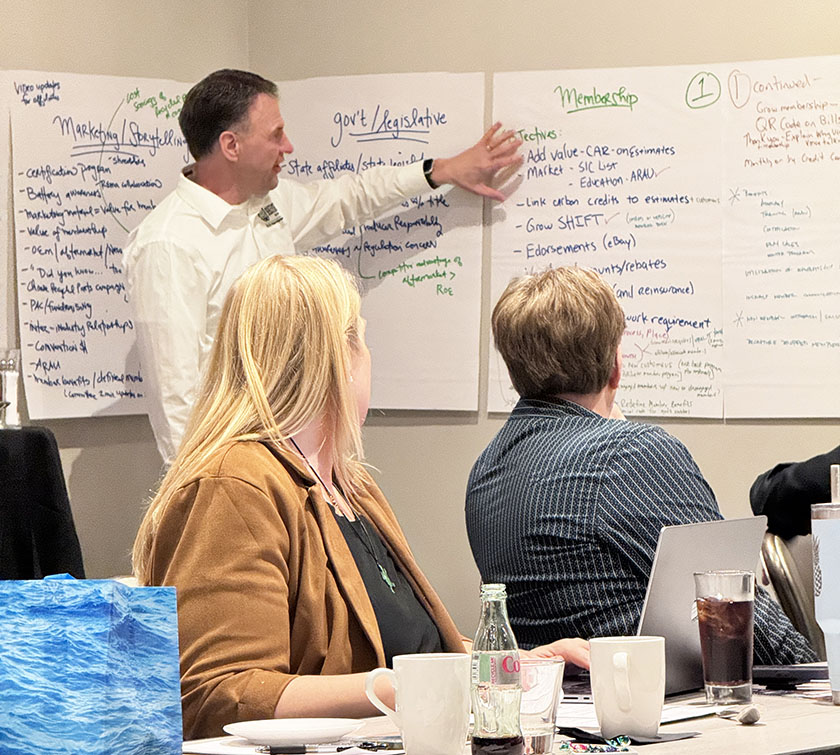
At the ARA Convention 2025, I had the privilege of delivering a presentation titled Shaping the Future of Our Industry – Developing the Leader Within You 2.0.
My goal wasn’t simply to share leadership theory. It was to challenge every one of us to think deeply about the kind of leaders we are becoming—because the future of our industry depends on it.
I opened with a simple but uncomfortable question: “Do you trust me?”
That question goes straight to the heart of leadership today.
We are operating in a world where trust is no longer automatic. Distrust has become the default setting. Leaders are questioned more quickly, scrutinized more heavily, and given less benefit of the doubt than ever before. In that environment, technical competence alone is not enough. Strategy is not enough. Authority is not enough.
The future of leadership is trust.
And trust must be built intentionally.
One of the foundational principles I shared comes from John C. Maxwell: Leadership is influence, nothing more, nothing less.
Too often, we equate leadership with position. But we’ve all seen people with impressive titles who struggle to lead effectively. Position may give you authority, but it does not guarantee influence.
Every single one of us influences someone—our teams, our peers, our families, our industry colleagues. The real question is whether that influence is positive or negative.
I walked through the Five Levels of Leadership framework:
Position—People follow because they have to.
Permission—People follow because they want to.
Production—People follow because of results.
People Development—People follow because of what you’ve done for them.
Pinnacle—People follow because of who you are and what you represent.
Most leaders start at Level 1—Positional leadership. That’s natural. But it’s a dangerous place to stay. At that level, once the authority is removed, so is the influence.
Real growth begins when we move beyond Position and begin building relationships, producing results, and ultimately developing other leaders. One of the most powerful shifts happens at Level 4 —when your success is measured not by what you achieve personally, but by how many leaders you raise up around you.
That’s when influence becomes sustainable.
The Key to Leadership: Priorities
I then turned to a challenge that every leader in the room could relate to: time pressure.
Whenever I coach leaders, the same issue comes up — “There aren’t enough hours in the day.” But here’s the truth: we cannot manage time. We all get the same 24 hours. What we can manage is our priorities.
One of the biggest mistakes we make is confusing activity with effectiveness. We fill our calendars and call it productivity. But leadership is not about being busy—it’s about focusing on what truly matters.
A few priority principles I shared included:
- Working smarter has a higher return than working harder.
- You can’t have it all.
- The good is often the enemy of the best.
- Proactive beats reactive.
- The important must take precedence over the urgent.
If everything is a priority, nothing is a priority.
I also talked about the importance of creating margin. Early in my leadership journey, I thought every waking minute needed to be filled with productive activity. I learned the hard way that this approach only creates stress—not just for the leader, but for the entire team and family.
Margin—the space between load and limit—is not laziness. It’s leadership wisdom. It gives us room to think, reflect, anticipate and renew energy. Without it, we burn out—and so do the people around us.
The Foundation of Leadership: Character
If influence defines leadership and priorities guide it, then character sustains it.
I used the analogy of a house. Before you purchase a home, the foundation is inspected. Why? Because no matter how impressive the structure appears, it cannot stand without a solid base.
The same is true for leaders.
We’ve all seen leaders whose influence collapsed overnight. In almost every case, the issue wasn’t competence—it was character.
I shared three areas that strengthen a leader’s foundation:
- Valuing people—placing others’ needs above your own.
- Practicing self-leadership—doing the right thing even when you don’t feel like it; and not doing the wrong thing even when you want to.
- Embracing good values—clearly defining and consistently living out your core values.
It is impossible to maintain good character if you haven’t defined what you truly value. When you know what you stand for, difficult decisions become clearer.
Character builds credibility. Credibility builds trust.
Consistency: The Engine of Trust
One of the strongest reactions in the room came when I spoke about consistency.
Many of us have experienced inconsistent leadership—where teams never quite know which version of their leader will show up to the meeting. That unpredictability erodes trust.
Consistency, on the other hand, creates a sense of emotional safety. It creates clarity. It creates long-term impact.
I summarized it in three simple statements:
- Be clear about what you expect.
- Reward it when you see it.
- Correct it when you don’t.
It sounds simple—because it is. But it requires discipline.
Trust is not built through occasional excellence. It is built through consistent behavior over time.
Trust Requires Risk
Finally, I challenged the room with this thought: the best way to know if you can trust someone is to trust them.
That always involves risk. Some people will disappoint us. But the greater risk
is refusing to trust at all. When leaders try to control everything, they limit both their own growth and their team’s potential.
Someone trusted us when we were still developing. Someone gave us an opportunity before we were fully ready. Now it’s our turn to extend that same trust.
Everyone Wins When the Leader Gets Better
I closed the session with a simple conviction: when leaders grow, everyone wins.
Our industry faces challenges. It faces disruption. It faces increasing complexity. But its future will not be determined by technology alone—it will be shaped by leadership.
If we grow our influence, clarify our priorities, strengthen our character, and lead with consistent trust, we will not only build stronger businesses—we will shape a stronger, more ethical, more resilient industry.
And that is a future worth leading toward.

Andy Latham is Managing Director of Salvage Wire. His desire is to highlight the professionalism in the vehicle recycling industry, increase knowledge and understanding, and keep everyone safe, ethical and profitable. Book your complimentary one-hour consultation today at www.salvageinsight.co.uk.