Let’s focus for a moment on three small things you can do to keep your business strong and growing. As you read this, you may think, “I already know all this stuff.” Don’t tune out! Coaches of professional sports teams never stop drilling the fundamentals, because games are often won – or lost – by the smallest of details. It’s the same in business.

One of the most significant success principles I’ve come to understand about thriving in business – or in marriage, family, friendships, or even spiritually – is this: you must pay attention to the small things.
This is not a new idea. Thousands of years ago, the Bible warned: “The little foxes destroy the vineyard” (Song of Solomon 2:15). Tiny foxes pick at grapevines, dig at the roots, and slowly weaken the plant until it dies. Businesses are no different. The big disasters usually begin with small things left unattended.
Here’s the lesson in one sentence: To keep your business prospering, pay attention to small details before they get out of hand.
Here are three small things that can have a big impact.
1. Keep Your Yard Organized and Safe
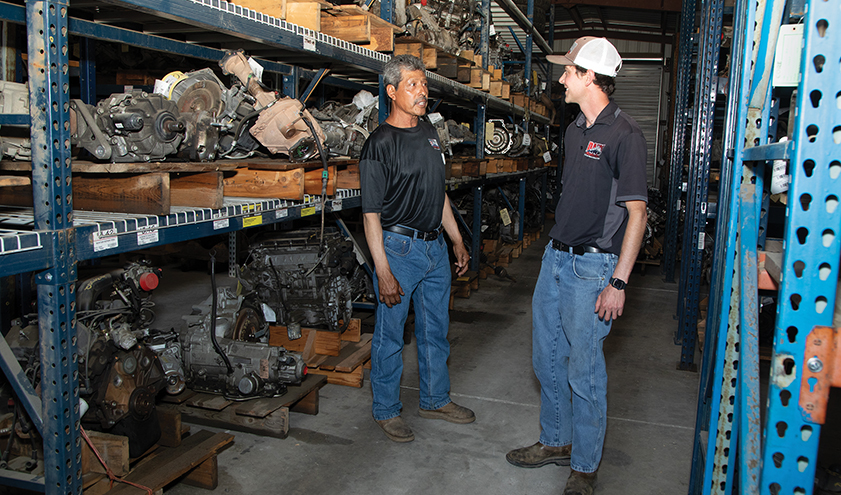
Start each day with a facility walk-through inspection, because a clean, safe yard isn’t just healthy – it’s profitable.
At a recent recycler conference in New York, successful yard owner Bill Tolpa (Tolpa’s Auto Parts, NY) stated that, although modern technology helps him run his business, one of the most important things he does every day is walk his facility. He looks for things out of place, mislabeled parts, and safety hazards, such as fluid leaks or clutter. He said most owners get bogged down tackling massive projects, while the little things keep slipping by. However, if you consistently walk through your facility, every little detail eventually gets noticed and improved.
Why it Works
Think of airline pilots. Before every flight – no matter how many thousands of hours they’ve logged – they go through a detailed checklist, so they don’t miss a thing. Not because they expect a problem, but because catching the small things prevents disasters.
Your daily walk-through does the same:
• Safety issues: Loose cords, oil spills, broken equipment.
• Customer impressions: Is the office clean? Are phones being answered professionally? Is signage clear?
• Operational flow: Is inventory tagged? Is something in the wrong place? Does something need attention?
Ten minutes a day can save thousands in accidents, wasted time, and missed opportunities. And just as important, your employees notice. When the owner is visible and invested, the team raises its game.
2. Stay Knowledgeable About Your Numbers
Numbers tell the truth about your business. Ignore them, and you’re flying blind. Many recyclers have been shocked to discover too late that cash is gone, margins have eroded, or inventory has ballooned out of control.
Years ago, I asked Ron Sturgeon – who successfully grew multiple yards in Texas – what his biggest key to success was. He credited much of it to participating in the early Howard Groups, made up of non-competing recyclers who met regularly. They dug deep into each other’s numbers, set improvement goals, and held each other accountable. Ron told me that too many owners are so busy putting out fires that they neglect their numbers, and by the time they see a problem, it’s often too late to fix.
What Numbers to Watch
Successful recyclers track more than just sales. At a minimum:
• Daily sales and gross margin.
• Inventory turns. How fast are parts moving off the shelves?
• Core returns and warranty claims.
• Top five expenses. Payroll, inventory, utilities, insurance, and equipment usually lead the list.
• Cash flow. Know when money is coming in and going out.
A good yard management system will generate these reports. But if you struggle with numbers, don’t give up. Get help.
Where to Turn for Help
The Automotive Recyclers Association (ARA) offers a free Mentoring Program to its members. If you are not a member, it is worth joining to participate. They connect you with experienced professional auto recyclers who are not in your competitive market. These recycler-mentors bring years of valuable experience to help you streamline your numbers, review processes and procedures, propose facility improvements to facilitate growth, and suggest ways to increase sales. It doesn’t matter if you’re a brand-new professional or a 30-year veteran; you don’t have to go it alone.
The bottom line: don’t wait until your numbers surprise you. Know them. Track them. Act quickly when trends shift.
3. Build Loyal Customers
Your money comes from customers.
If you neglect them, you’ll lose them.
A classic survey showed why customers leave:
• 1% die
• 3% move away
• 5% switch because of a friend’s recommendation
• 9% switch to what they think is a better service
• 14% leave due to dissatisfaction
• 68% leave because of neglect
Think about that. Almost seven out of ten customers walk away simply because they feel ignored. That’s preventable.
The Power of Contact
Here’s the simplest solution: call them. Visit them. Write them a personal note. Don’t send a form letter – make a personal contact.
Marketing Metrics, a research firm in New Jersey, found that the chance of selling to a former customer is 20–40%. Compare that to just 5–20% for a new prospect. Why? Because they already know you. You already know them. You’ve got the advantage – if you use it.
When you reach out, ask: “We value you as a customer. Is there anything wrong with our service? I want to know.”
If you sincerely listen, apologize if needed, and offer to fix the problem, most customers will give you another chance. In fact, many will end up more loyal than before.
Different Types of Customers
Not all recyclers have the same customer mix. Self-service yards often attract a high volume of DIY walk-ins who may never return. Full-service yards depend on steady repeat orders from repair shops and insurance companies. For those customers, loyalty is everything.
So, make customer care a habit. Call one top customer every day just to check in. Ask how the part worked out. Thank them for their business. Solve complaints immediately. These small gestures add up to big loyalty.
The Law of Reciprocity
Often, customers don’t stop ordering because they’re unhappy. Life just distracted them. Maybe they lost your number, switched staff, or got busy. When you reach out, many feel embarrassed that they “forgot about you.” That’s when the law of reciprocity kicks in: because you showed concern, they’ll want to return the favor by giving you more business.
Neglect loses customers. Attention wins them back – and keeps them.
Bringing It All Together
Let’s recap. Thriving recyclers don’t rely on luck or massive, once-in-a-lifetime strategies. They do small, smart things consistently:
- They walk their yards every day. Problems get caught early, safety improves, and employees step up.
- They know their numbers. They don’t get blindsided – they see trends early and act quickly.
- They nurture customer loyalty. They prevent neglect, repair relationships, and build deeper partnerships.
It’s not complicated. But it is powerful.
Here’s My Challenge: Start Tomorrow Morning
• Take ten minutes for a walk-through.
• Look at one key number.
• Call one customer.
Do those three things every day for the next month, and you’ll be amazed at the results.
The Bible reminds us that it’s the little foxes that spoil the vineyard. Don’t let little details spoil your business. Instead, use them to strengthen it.
Small things, done consistently, will keep your yard strong, your numbers healthy, and your customers loyal. Do them, and you won’t just survive in this industry – you’ll prosper.

Mike French is retired after 39 years of business in the automotive recycling industry. He is an author, publisher, consultant, and speaker. Mike is the founder and executive director of the Christian Auto Recyclers and Vendors Association (CARVA) and will be at upcoming recycler trade shows and events. Mike is available to speak at your group, conference, or event. He loves to share inspirational stories that demonstrate how the Word of God actively changes lives.
He can be reached at mike@carva.group. Visit www.CARVA.group and/or www.PowerPackedPromises.com.