CRUSH 2.0 is in development to improve usability and expand capabilities. Here is the scoop!
Caryn Smith

Crush Software Solutions LLC recently announced it has acquired S3 Software Solutions LLC, developer of Crush, the largest yard management system used by more than 200 self-service auto recycling yards in the U.S. and Canada. S3 will now operate as Crush Software Solutions, LLC, with founder Dimitri Gerontis serving as Chief Operating Officer.
The ownership group is led by people with deep roots in auto recycling, including the family offices of Tom D. Klauer Jr. – active in the redevelopment – and Kendig K. Kneen – serving primarily as an investor – who are committing an additional $3 million to reengineer the platform, add new capabilities, and return buying power to independent yards. Between the two, they have operated over 70 yards during the last three decades. “We have learned by operating our own yards that we can use the CRUSH software to teach our buyers to buy inventory that will yield far better results and thereby far more profits,” Klauer said.
What’s the Big Deal?
For more than 15 years, S3’s Crush has supported self-service auto recyclers across the United States and Canada. With the acquisition, Crush Software Solutions will accelerate the roadmap for Crush 2.0. The company’s goal is to double the footprint to over 400 yards by delivering a modern, cloud-hosted, enterprise-ready system that improves vehicle sourcing, pricing, and sales.
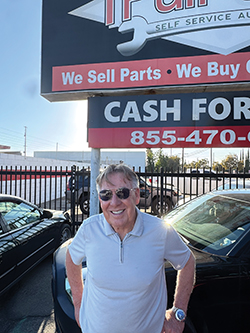
“For years, Crush has been the best yard management system in the market. But now we’re building Crush 2.0 – not just to manage today’s yards, but to future-proof the industry,” said Klauer. “Independent operators deserve enterprise-grade tools that give them buying power and competitive edge.”
“This isn’t about tweaking reports,” said Gerontis. “This is about transforming how inventory is sourced and sold. Our goal is to give operators data they can trust – from the first bid to the last part sold.”
Improvements to expect with Crush 2.0 include a complete reengineering of the software with a modern cloud architecture, data-driven vehicle acquisition, integrated marketplace connections, and enterprise-grade analytics and security.
Automotive Recycling ToolBox™ Edition was granted an exclusive interview on the merger and what Crush users can expect in the future.
ToolBox: Share your experience in the automotive recycling industry.
Tom D. Klauer Jr.: I’ve been involved in the self-service recycling business for 35 years. I was one of the founders of Pick-n-Pull®, starting as a minority partner and then rising to CEO in 2003 until 2015. During my tenure, we built the business to 62 locations. I had a lot of fun with it, and I’m still an owner. I started another company in California called iPull-uPull Self-Service Auto Parts, and it was there that I first learned about Crush when we built the first yard in 2016. We now have five yards on the system.
ToolBox: How did you come to invest in the software?
Klauer: Crush is the best system out there for self-service. Almost a year ago, I met with Dimitri, who has an excellent understanding of the business, to discuss things I’d like to see as a user of the software. We discussed aspects such as it being an enterprise system and cloud-based. It lacked advanced reporting and purchasing tools. Although it’s the best in the marketplace, I believe it could become a truly great product with some investments and new resources. Dimitri agreed, and we continued to talk.
On September 19, we closed the deal to advance Crush to 2.0 and beyond.
Dimitri remains a vital part of the company. We have assembled a new team around the effort, and even before the deal was final, we were contributing resources towards development, including adding 10 full-time team members to redevelop the software.
Ryan Paterson – a technology leader with more than 20 years in federal and
commercial markets – is the Chief Executive Officer and will run the high-level company business.
Dimitri is Chief Operating Officer and continues to interface with customers and oversee development.
Kay Schaefer – a tech entrepreneur known for launching and scaling digital businesses that turn attention into outcomes – is Chief Product Officer.
A more dynamic system is truly needed in the industry, and Crush is poised to take the next step, building upon its solid foundation.
ToolBox: What can Crush users expect? When will they see these new changes? How will changes roll out?
Klauer: All improvements will be beta-tested and then slowly released to all users. First, the Crush architecture will be migrated to the cloud for enhanced security. Then we will convert it into an enterprise solution, providing owners with multiple locations with better access and data. Currently, each location has an individual server. Third, we will address integrating more comprehensive reporting into the system.
For the future, one of the most important upgrades is the development of internet-based, data-driven vehicle acquisition capabilities. We want our users to be able to purchase vehicles using pricing tools that are based on real inputs, such as a vehicle’s worth as an operating vehicle or as scrap, its parts value, and other relevant variables. The system should be able to evaluate a vehicle and determine what the operator should pay for it.
Especially when it comes to self-service, purchasing is often more of a system of discipline than based on an operator’s data.
Even understanding when a vehicle comes in, if it’s just a scrap vehicle, how much does that car weigh? What value are the catalytic converters and other cores? That is the kind of system we aim to build, and we will likely dedicate the most time and effort to this capability right now. If you don’t have good inventory at the right price, then you are not competitive.
The plan is to release the next iteration for beta testing to several of the larger user operators immediately after the first of the year and to release the new version of Crush for the entire operating platform system in the spring to early summer. When we switch over, it should be a very seamless transaction for the customer itself. This effort is a huge undertaking; we’ve got a lot of great users of Crush, and the last thing we want to do is be disruptive to their businesses.
ToolBox: Will the changes impact the price of the service?
Klauer: It will be modular-based. There will be a basic Crush software, similar to the current approach, that provides a Point-of-Sale system, inventory management, and other essential functions. If you want, for example, the enhanced buying tool, that will be an upcharge, and so on.
ToolBox: What is the feedback from the system’s larger users on potential?
Klauer: They are very excited about it. They have been asking for more. They want better reporting, an enterprise solution, and cloud-based processing. They want to be able to acquire more data. Dimitri is also excited about having the ability to fulfill the dream that he’s always had for Crush and its full potential.
Much of Crush 2.0 development will incorporate all our collective years of experience as yard owners and technology developers – with input from users – to build an all-inclusive system, from customer loyalty programs to vehicle purchasing to reporting dashboards with KPIs – all the things you need to know as an owner and operator.
We will design the system with those kinds of plans in mind. If something is working, let’s figure out how to emulate it. If something isn’t functioning well, we will fix it or change it. We have spoken with several super users over the past few days to share our plans, and we hope they are excited about it. Everyone we have talked to has said they were ready for the changes.
ToolBox: What are your thoughts on future of the self-service model?
Klauer: Ten years ago, you could run a self-service yard with not a lot of expertise, and you would make money. That is not the case today. With increased competition and complexity in buying, it is crucial to make decisions based on real-time data. Additionally, we must market ourselves more effectively and accurately portray our true image as a self-service provider, such as through social media, and remain open to change.
If we don’t change the business model and do it with more intelligence, we are in trouble, in my opinion, and profit margins are decreasing. For instance, at my businesses, we’re pulling parts for customers. Also, people will want to pay for a motor that is tested and guaranteed; not every motor needs it, but some of the high-dollar motors will sell for more. There is an opportunity for growth in these areas. Yet I am still very optimistic about the business, and Crush 2.0 can help.
A self-service yard isn’t for everybody. Some people do not want to pull a part, but there is a way to provide a part to a mechanic to pull the part, and fix their car. While we are now competing with online sales platforms like eBay and the aftermarket, people prefer OEM-quality parts, which is beneficial for us, but we must operate smartly. There are numerous opportunities in the business. Our goal is to stay ahead of the customer in the 21st Century.
ToolBox: For the consumer, the value of selling an off-the-street end-of-life vehicle to an auto recycler lacks appeal, as many recyclers quote the same price for every car. Should that change?
Klauer: I know people who adhere to the one-price philosophy. It is questionable whether that works well. The goal of the new Crush system is to determine the value of a vehicle, regardless of its operational status, mileage, condition, or any other factors. It will evaluate every car on its own merit and calculate a price that suits that car.
There is a stigma that we should not pay over $300-$400 for a car. We need a system that takes the thinking out of it and determines, based on actual sales data, whether buying this car will result in $500 worth of parts sales, $400 in scrap value, and $200 worth of catalytic converters. You can pay $X for this car and still be very profitable.
ToolBox: Final thoughts?
Klauer: Self-service recycling has become more competitive, more complex, and more connected. The days of making money with limited data are gone.
Crush 2.0 is positioning yards for the future: smarter buying, faster selling, and deeper customer engagement.
Our mission is simple. Give independent yards the same power the big players have — and then some. Crush has laid an extremely strong foundation. Crush 2.0 will be the launchpad.
I’m very excited to be partnered with Dimitri. We have a great team in place, and we look forward to making Crush an even more superior product than it is today.
[SIDEBAR ONE]
Beyond the Yard: Expanding Opportunity
Crush 2.0 isn’t stopping at incremental upgrades. The team is pursuing strategic partnerships and expansion into untapped markets.
• Growth markets: Over 20 major metro areas in the U.S. and 17 Canadian CMAs remain without a Crush presence – from New York and Miami to Montreal and Calgary. These represent billions in untapped vehicle flow.
• Impactful Partnerships: Emerging partnerships will mean thousands of new vehicles flowing directly into Crush yards, creating new revenue streams and powering a concierge service that handles pickup, payment, and resale.
• National brand potential: A new car-buying platform could position Crush as a competitor to national players like Peddle, offering end-to-end consumer engagement.
“Buying cars is the single biggest pain point in this industry,” said Ryan Paterson, Crush’s new CEO. “By integrating auction feeds, marketplace tools, and predictive pricing, we’re turning that pain point into a growth engine.”
[SIDEBAR TWO]
Building for the Next Generation
The leadership team — Klauer, Kneen, Gerontis, Paterson, and Kay Schaefer — is aligned on a vision of Crush as more than a yard management tool. They see it as the digital operating system for automotive recycling: inventory, pricing, sales, customer engagement, and beyond.
Features on the horizon include:
• Cloud-native architecture with enterprise controls
• Integrated buy/sell model calculators
• Marketplace and interchange connections (including potential Car-Part integration)
• Customer loyalty and omni-channel sales tools
• Data-driven dashboards for margin, throughput, and KPIs
“This is not just a rebuild,” said Schaefer. “This is about creating an ecosystem where independent operators can compete at scale with anyone — online sellers, aftermarket parts, or even the OEMs.”

Caryn Smith, is the editor of Automotive Recycling magazine and Automotive Recycling ToolBox Edition. She has been covering the industry for 25+ years. As a freelance writer, she is a contributor for other industry publications, such as Recycling Today, International Filtration News and International Fiber Journal, among others.